Bangladesh in 2025: The most influential ten
A look back at the year through the people who influenced it.
As 2025 draws to a close, it is time to reflect on the ten Bangladeshi individuals and groups who have been the most influential this year. As with last year’s list, these are not the best or most important people, nor have they exclusively made positive or productive contributions. With the country heading towards a seminal general election, here is a look back at the year through the people who shaped it.
Ten: Women’s Reform Commission and Women’s March
Women were supposed to, finally, be given due recognition by a chief adviser who was renowned for being a standard-bearer for their cause. Instead, the interim government successfully oversaw the political exclusion and social castigation of women. Cast aside by its government amid a public maelstrom of misogyny, the Women’s Reform Commission bore the insult with grace and fury. In an impressive show of defiance and celebration as unprecedented as their doomed status, women came together in droves for the Women’s March on May 16th, peacefully occupying the streets of Dhaka in front of the parliament. When it coalesced outside the Jatiya Sangsad Bhaban — empty, awaiting elected occupants — it sent a strong signal to future governments not to fail women as the current one had.
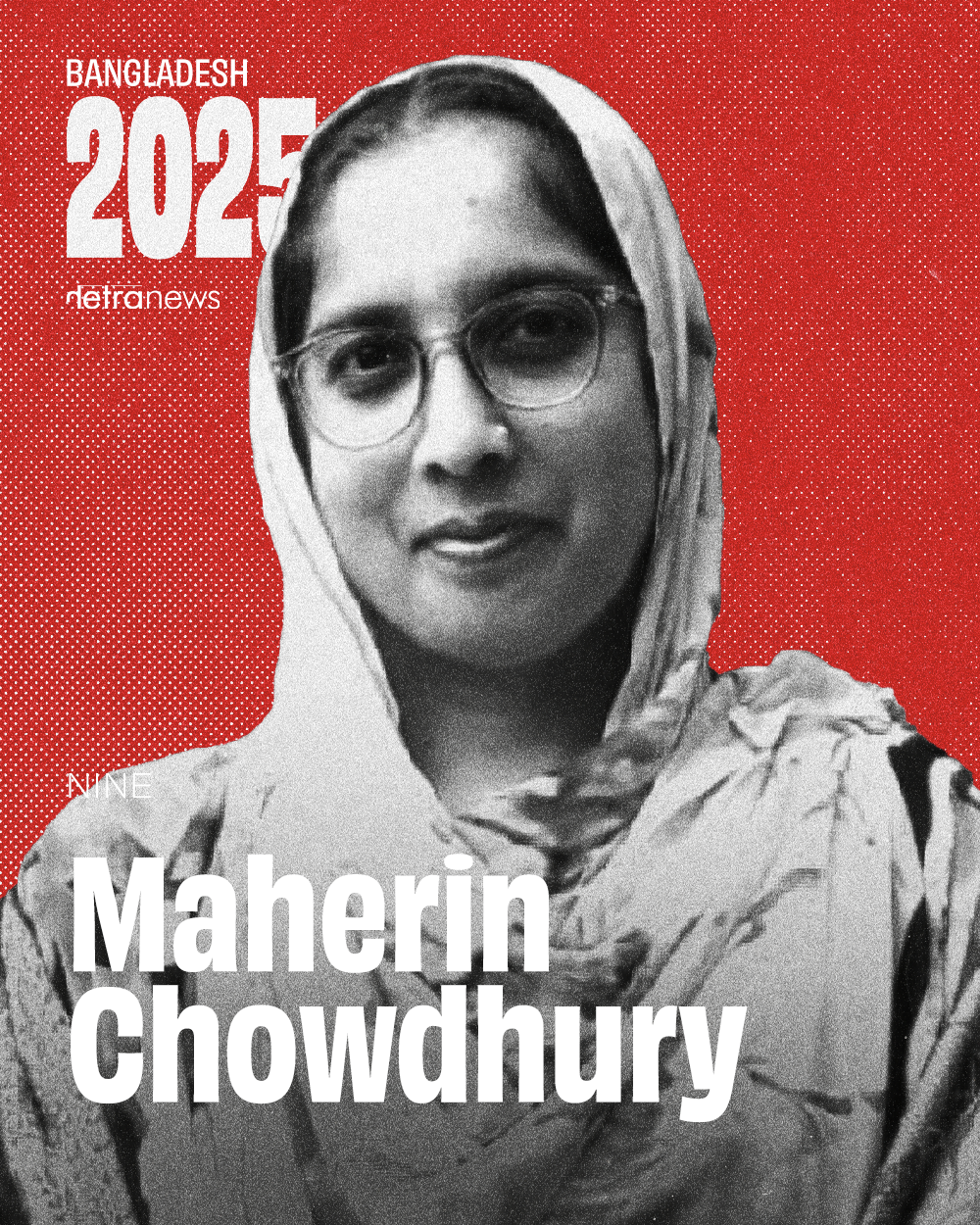
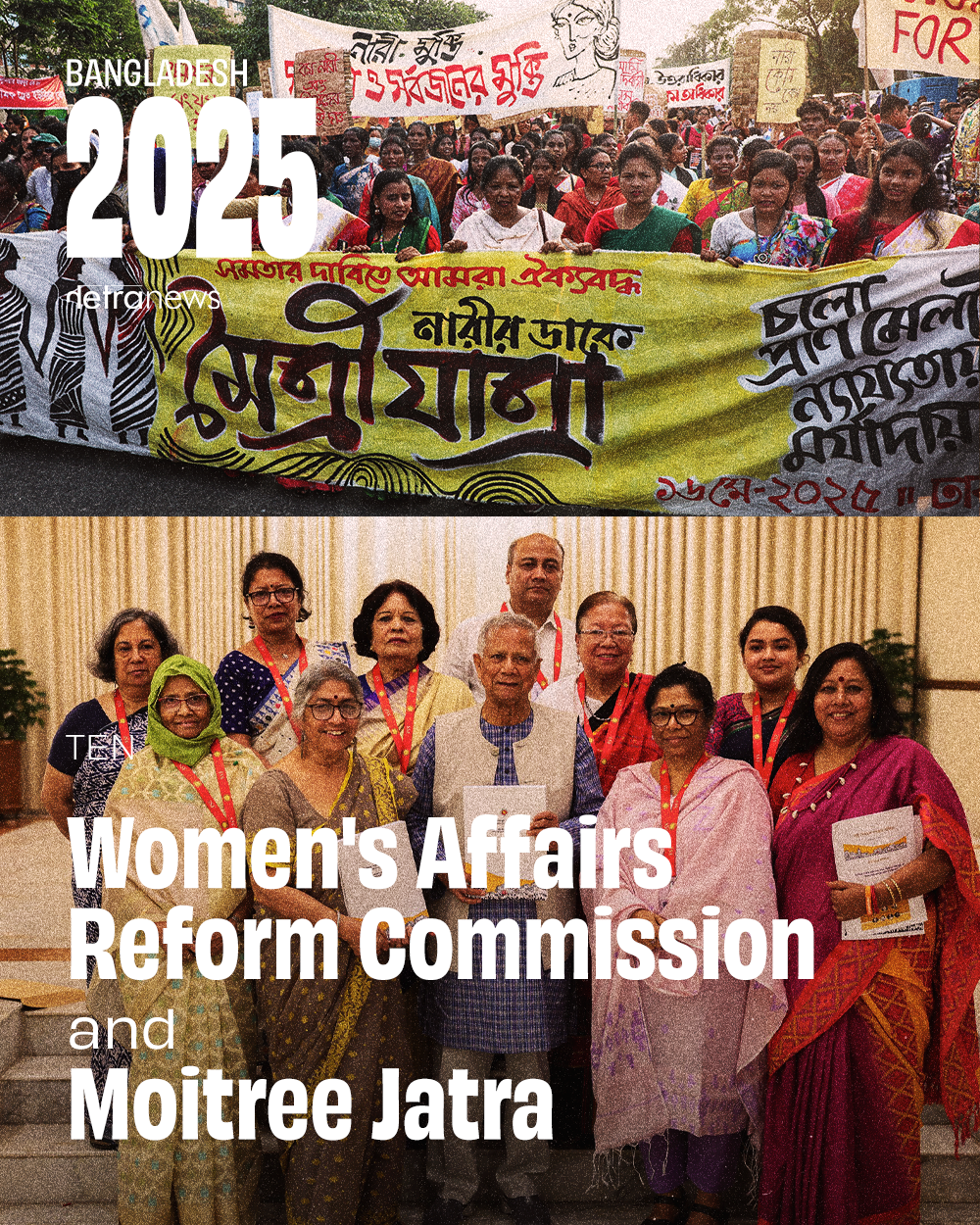
Illustration: Subinoy Mustofi Eron/Netra News
Nine: Maherin Chowdhury
“They are also my children. They are burning. How can I leave them?” These were Maherin Chowdhury’s words to her husband on July 21st, when he was pleading with her to leave the premises of Milestone College after an air force fighter jet crashed there. With the institution in flames, this teacher walked towards it. She saved lives, making sure more of her students did not appear on the list of deceased. In the process, she added her name to that list on July 23rd, already too long. In a country accustomed to valorising martyrdom, Chowdhury’s act of ultimate selflessness represents its best angels.
Eight: Hamza Choudhury
First, the British took football around the world while looting it. Then, the world kept beating the British at kicking a ball around while they refused to return their ill-gotten gains. Now, England repatriated one of its finest — an FA Cup-winning, Premier League thoroughbred capped by the English national team at U21 level — to his rightful place. If Hamza Choudhury is the sporting Parthenon Marbles with the right ending, it is because he chose to play for his motherland. In so doing, he reignited the people’s game in the public imagination, and became a global ambassador for Bangladesh.
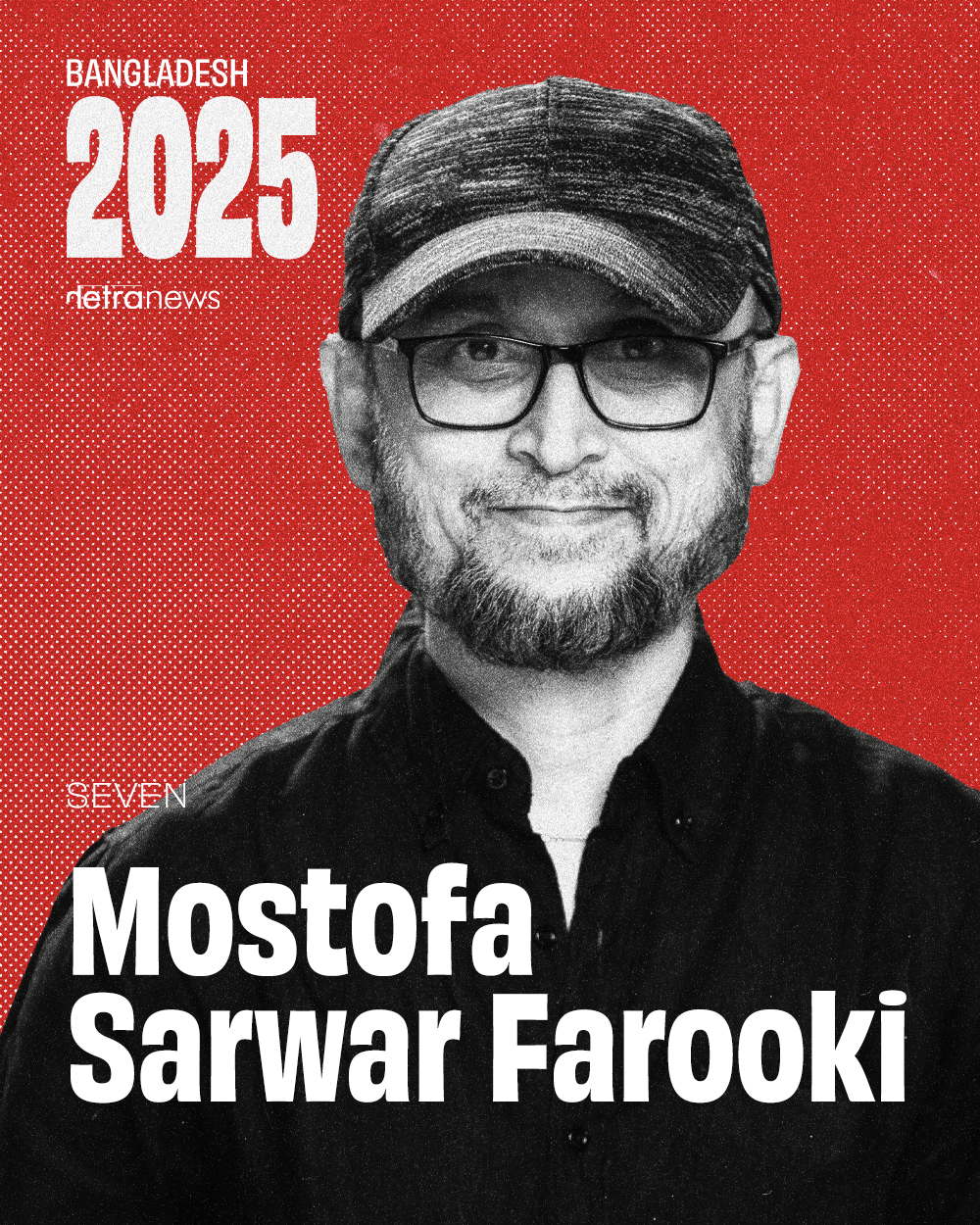
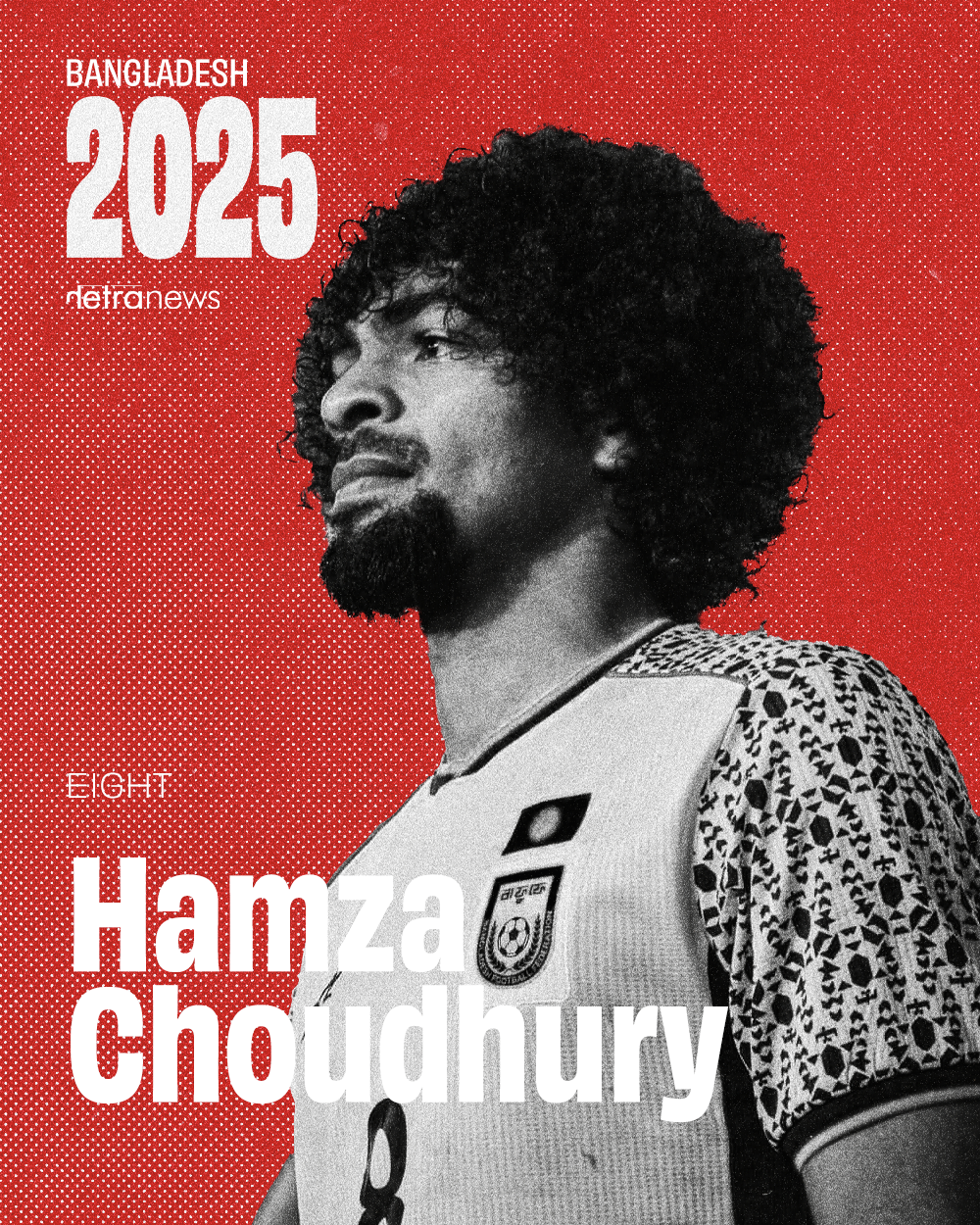
Illustration: Subinoy Mustofi Eron/Netra News
Seven: Mostofa Sarwar Farooki
Bangladesh’s cultural and intellectual old guards remain tainted by association with the authoritarian Awami League. Mostofa Sarwar Farooki has managed to wash away the taint and rise from their ranks. Showing what can happen when a qualified person is allowed to use their skills rather than face partisan persecution, Farooki has created a space for culture in an interim government that has promoted those who seek to destroy it. He has celebrated diversity while his colleagues in government have fought against it, and he has documented the Awami League regime’s human rights violations with diligence.
Six: The Commission of Inquiry on Enforced Disappearance
Number four on the list last year, members of the Commission of Inquiry on Enforced Disappearance remain among the bravest people in the country. They continue to painstakingly document in vivid detail the most inhuman acts carried out by the military, Directorate General of Forces Intelligence (DGFI), Rapid Action Battalion (RAB) and the police, under the Awami League government. Undeterred by bureaucratic roadblocks and political pressure, and in spite of its targets being among the most protected Bangladeshis, the commission has not stopped its accountability efforts.
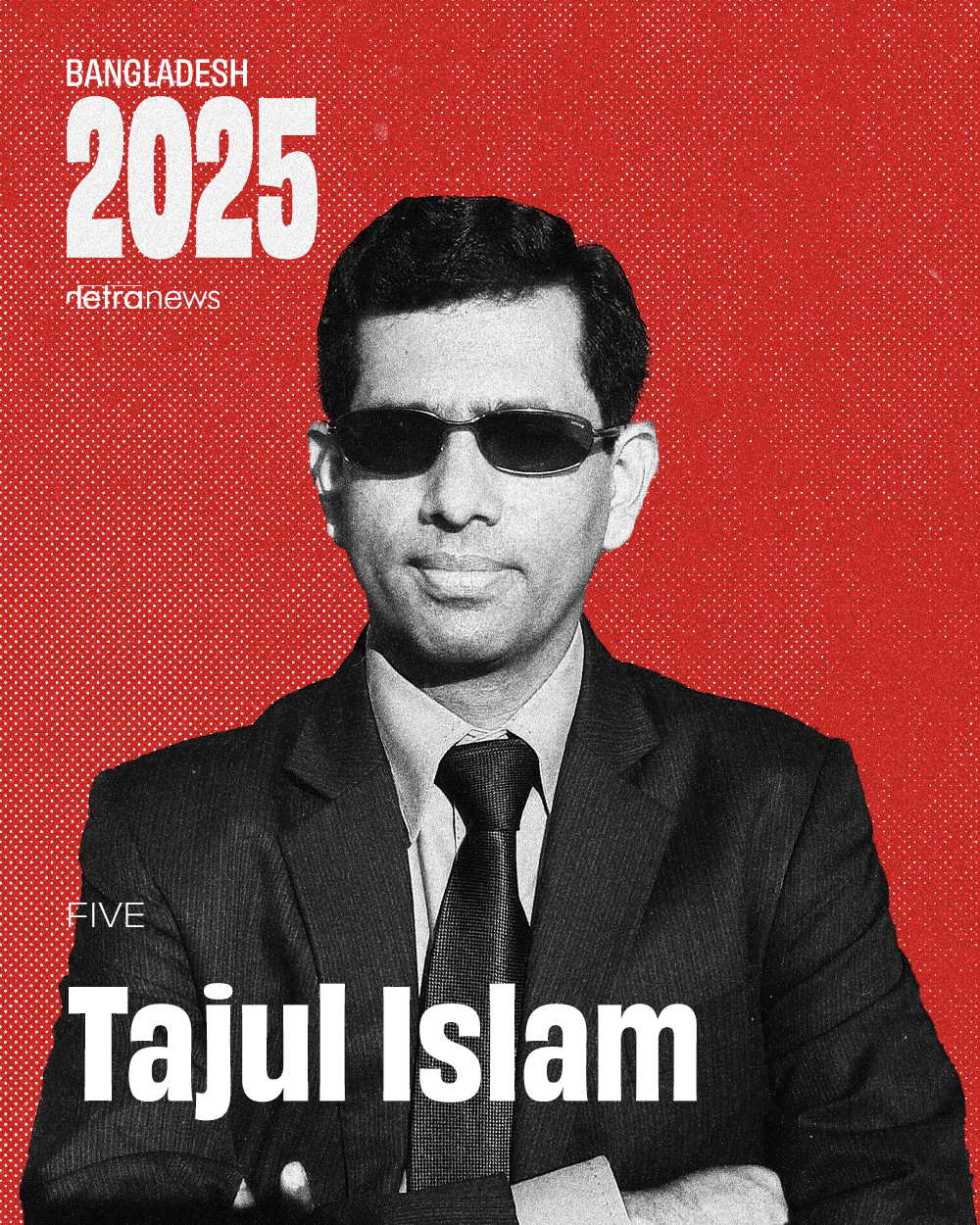
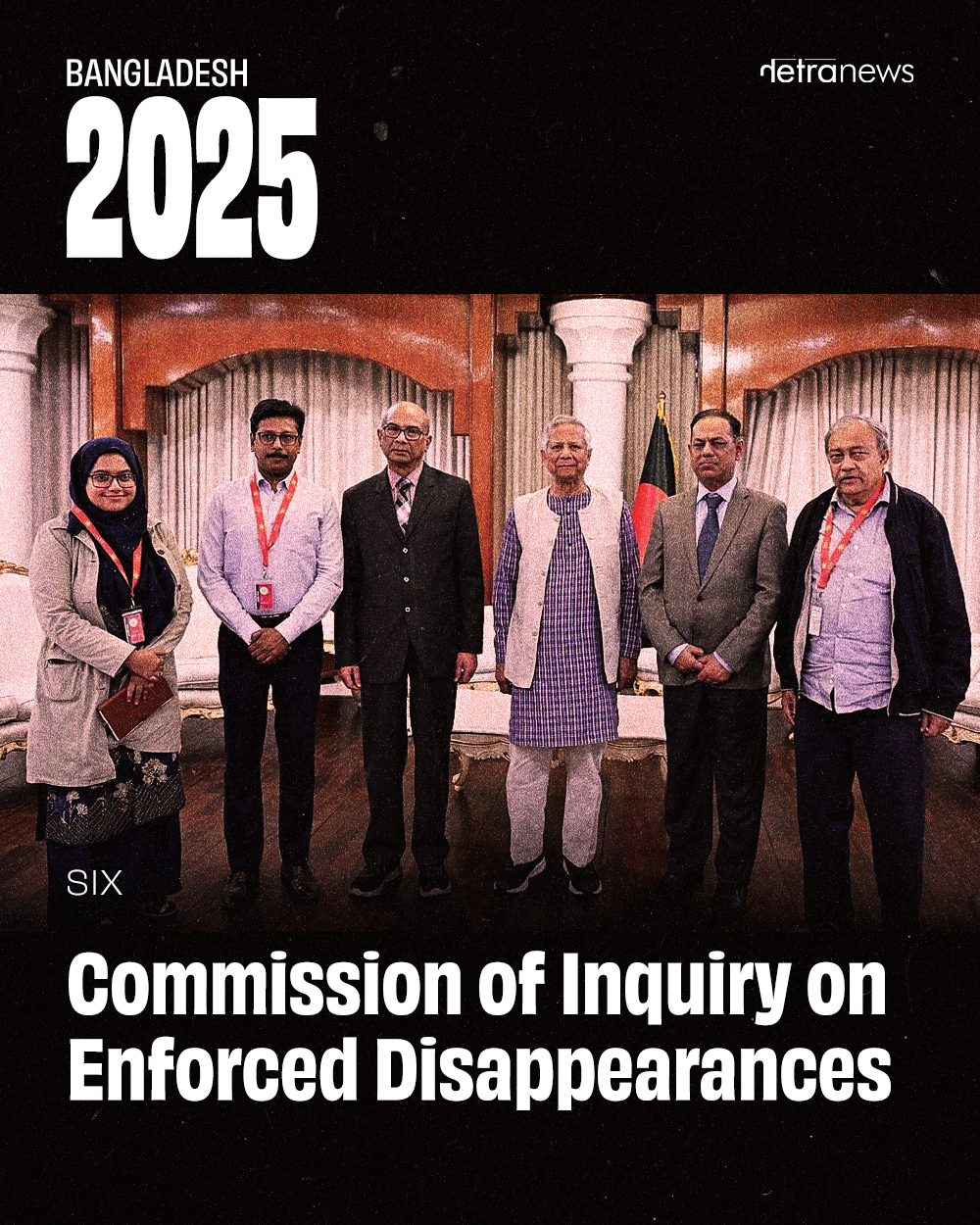
Illustration: Subinoy Mustofi Eron/Netra News
Five: Tajul Islam
The International Crimes Tribunal (ICT) has been the personal fiefdom and political theatre of its chief prosecutor. Beknighted by the Yunus government, Tajul Islam went from being a defence counsel highly critical of a deeply flawed and heavily politicised ICT during the Awami League regime, to wielding its full vengefully punitive might against the Awami League. In the absence of reforms or reins, he has carried on the ICT’s proud tradition of perverting justice and accountability. That the Awami League can, incredibly, have legitimate grievances is in no small part down to Islam’s machinations in the corridors of the ICT.
Four: National Consensus Commission
Tasked with delivering Yunus’ signature reform agenda, the proud men of the National Consensus Commission have bumbled their way through the majority of the year. They shifted goalposts, goals and posts, until they stumbled towards the off the cuff finish line of a promised referendum that no one can make sense of. What is absent from what they sought consensus on — judiciary, bureaucracy, education, healthcare, media, women, minorities — is as glaring as how they have failed to reach a consensus. Nevertheless, they have soldiered on, to manufacture newer ways to impose their vision on Bangladesh.
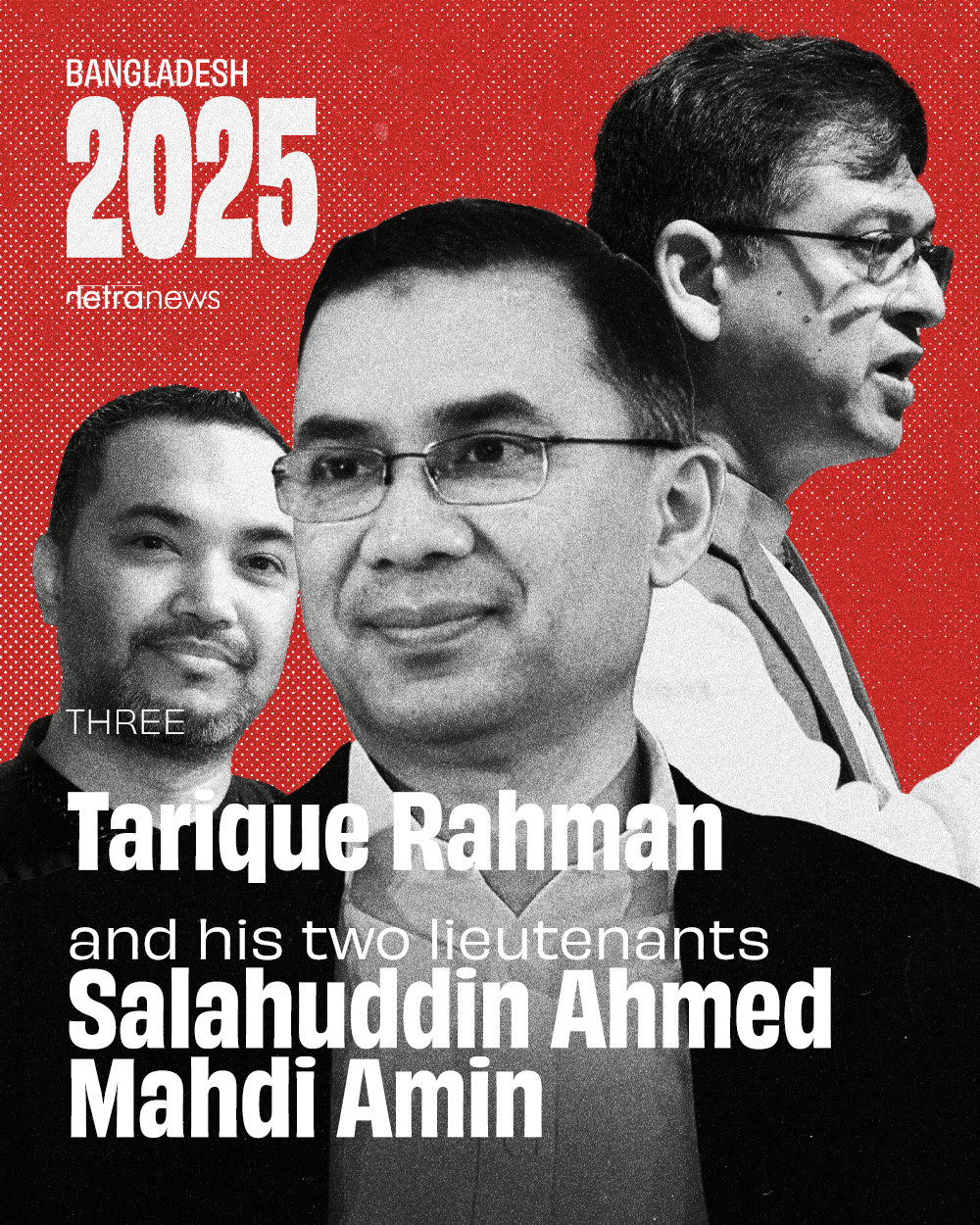
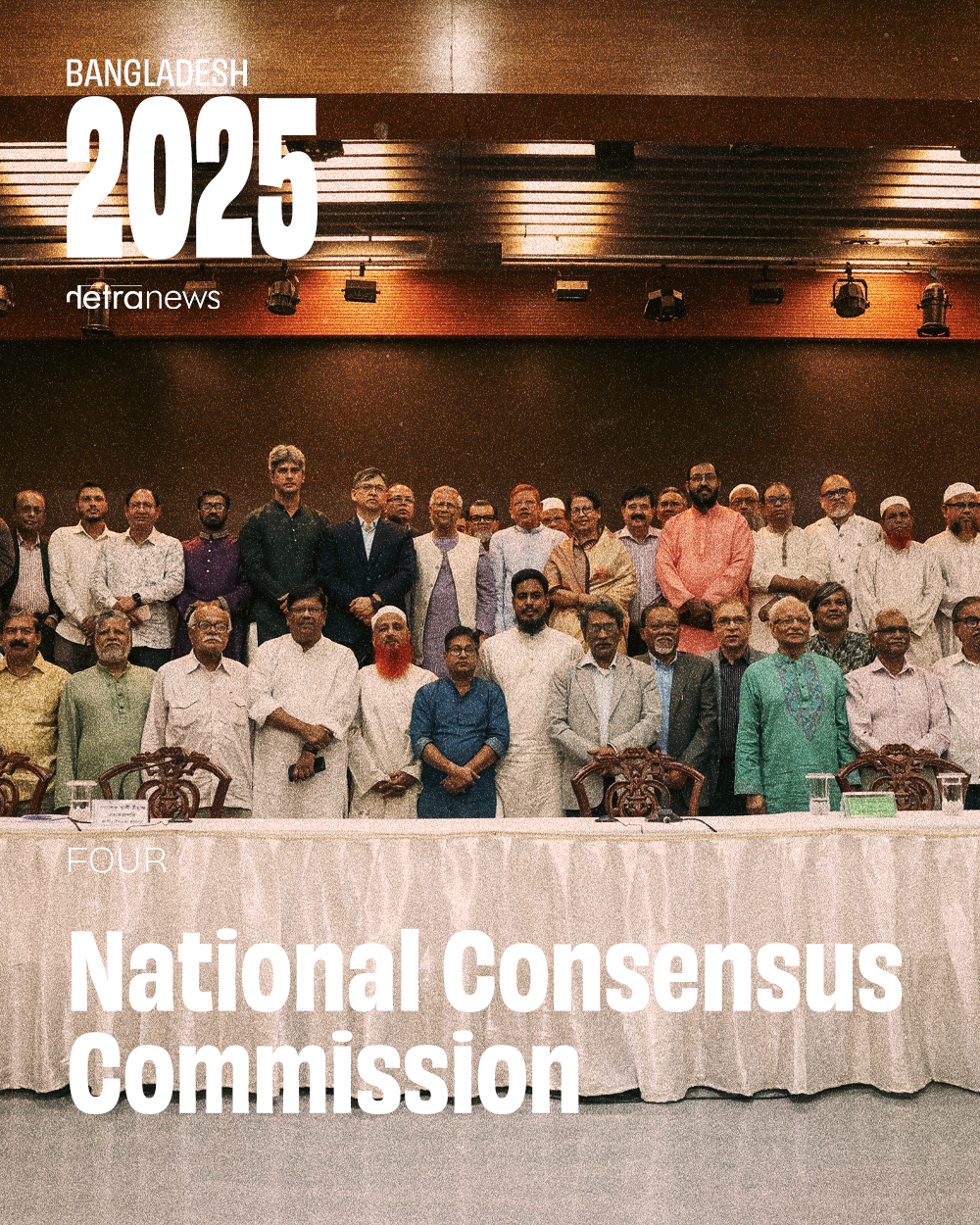
Illustration: Subinoy Mustofi Eron/Netra News
Three: Tarique Rahman and his two lieutenants
Tarique Rahman’s well-choreographed, long-awaited return to Bangladesh may have put wind in the BNP’s sails, but its impact is a continuation of the influence of what came before. While Rahman — number seven on last year’s list — and his sidekick, Zebu, put in long hours in front of his computer in his London study, Salahuddin Ahmed and Mahdi Amin did the long yards in Bangladesh. Their combined efforts have kept a party not known for its discipline, from descending into chaos, and brought a party adrift in the ideological wilderness, towards a clearly defined Western liberalism. They have shown promise in how they have navigated the consensus negotiations, and the protracted wait for an election. Whether they can deliver on that promise without reverting to the norm will determine whether there will be a new, healthier politics in Bangladesh.
Two: Sharif Osman Hadi
An aspiring politician and parliamentary aspirant was shot in broad daylight on December 12th, cutting short a promising life. Sharif Osman Hadi (born Osman Goni) was a charismatic, fledgling ideologue with an abundance of energy, enthusiasm, and forthrightness. His assassination propelled him to the status of a national figure. Having failed to protect him, the interim government lionised him as a martyr. This has solidified the Muslim nationalism Hadi promulgated, and granted a platform to political extremists. Coupled with his own views, his killers having fled to India have stoked the flames of anti-India sentiments into a raging fire.
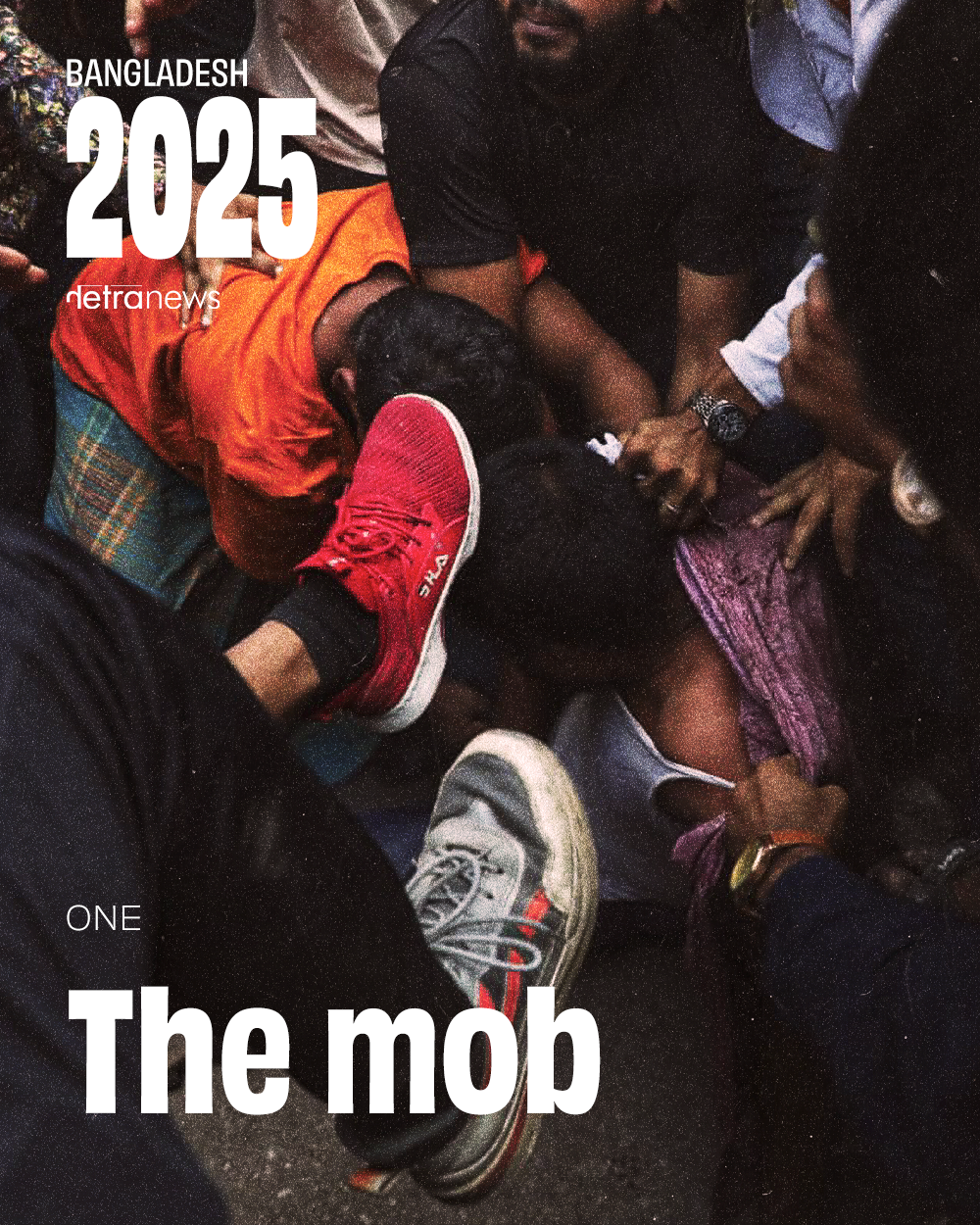
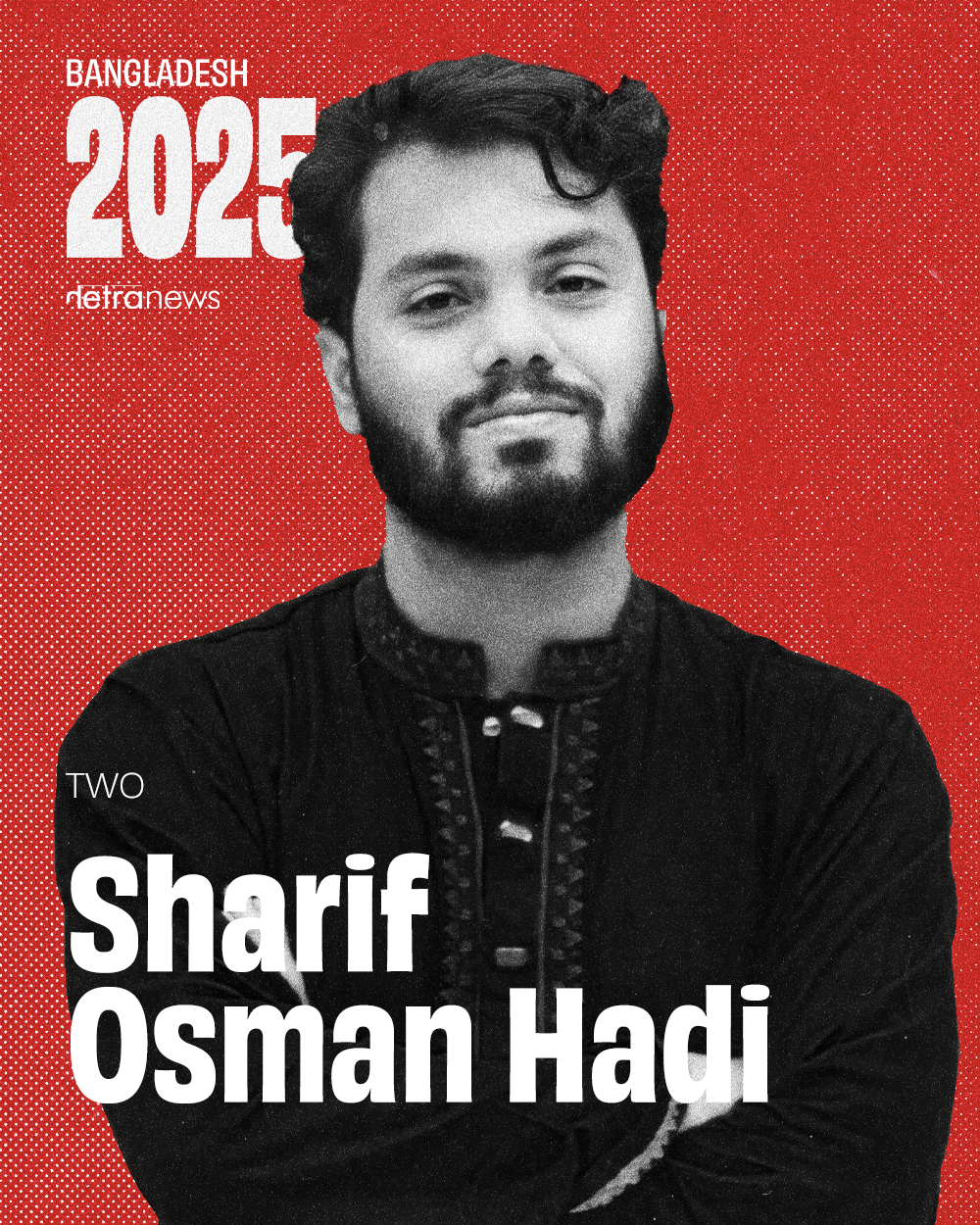
Illustration: Subinoy Mustofi Eron/Netra News
One: The mob
The Yunus government’s biggest contribution to Bangladeshi politics is the mob. From demolishing properties of historical value and private ownership, shrines and mausoleums, newspaper offices and sundry, to lynching minorities desecrating graves and women’s bodies, whenever something has needed to be accomplished, crowds of febrile men have manifested themselves — incited from abroad — to deliver with steely determination. They carry a distinctive far right zeal, instigated by such messaging to mobilise and wreak havoc. They have never displayed any peaceful intent, and have become more and more brazen each time. The mafia is dead; long live the mob.●