Faced with fuel shortage, Bangladesh’s motorists turn to cooking gas
The economics of the cheaper alternative are compelling. But the risks, experts say, are not.
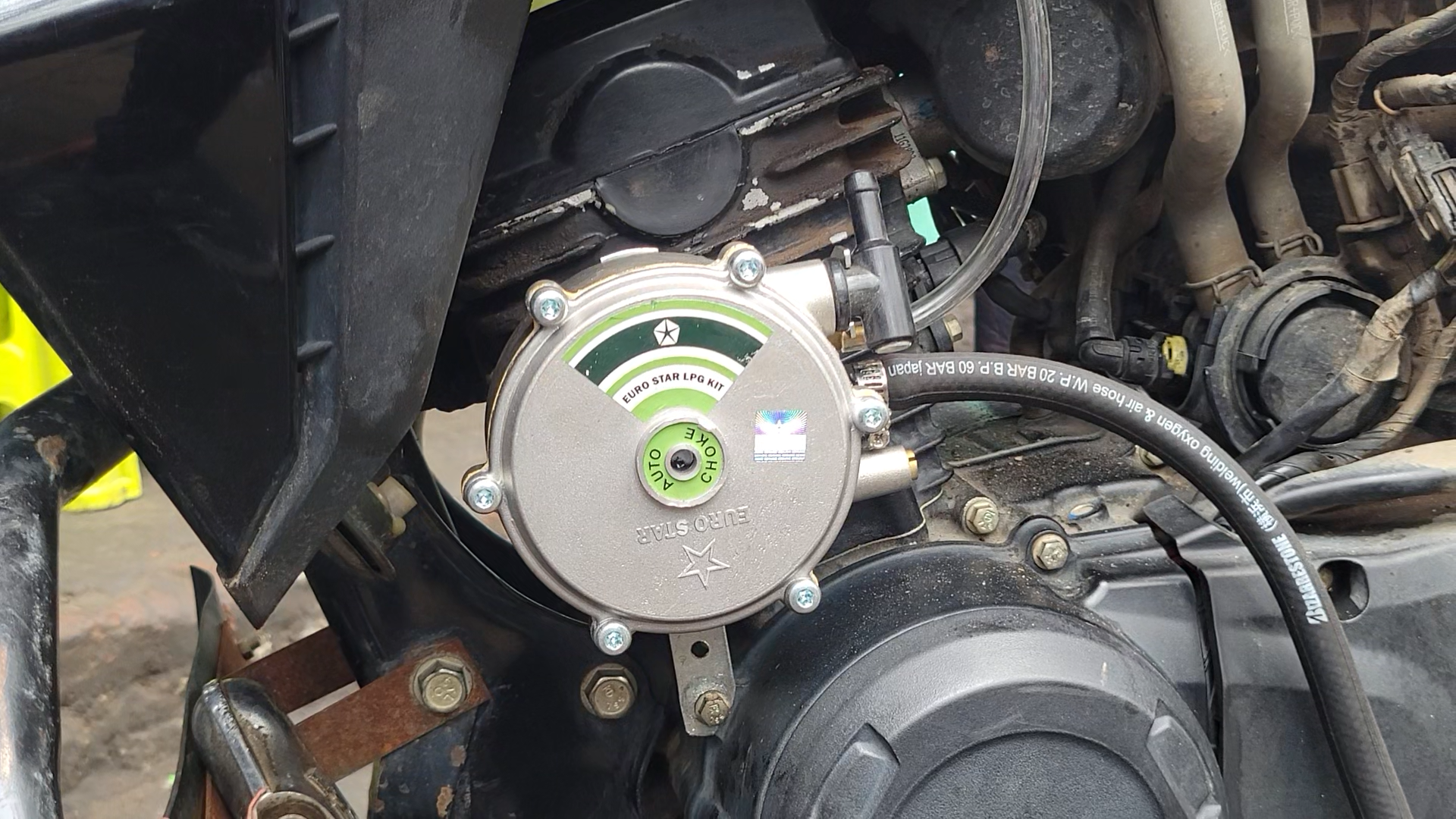
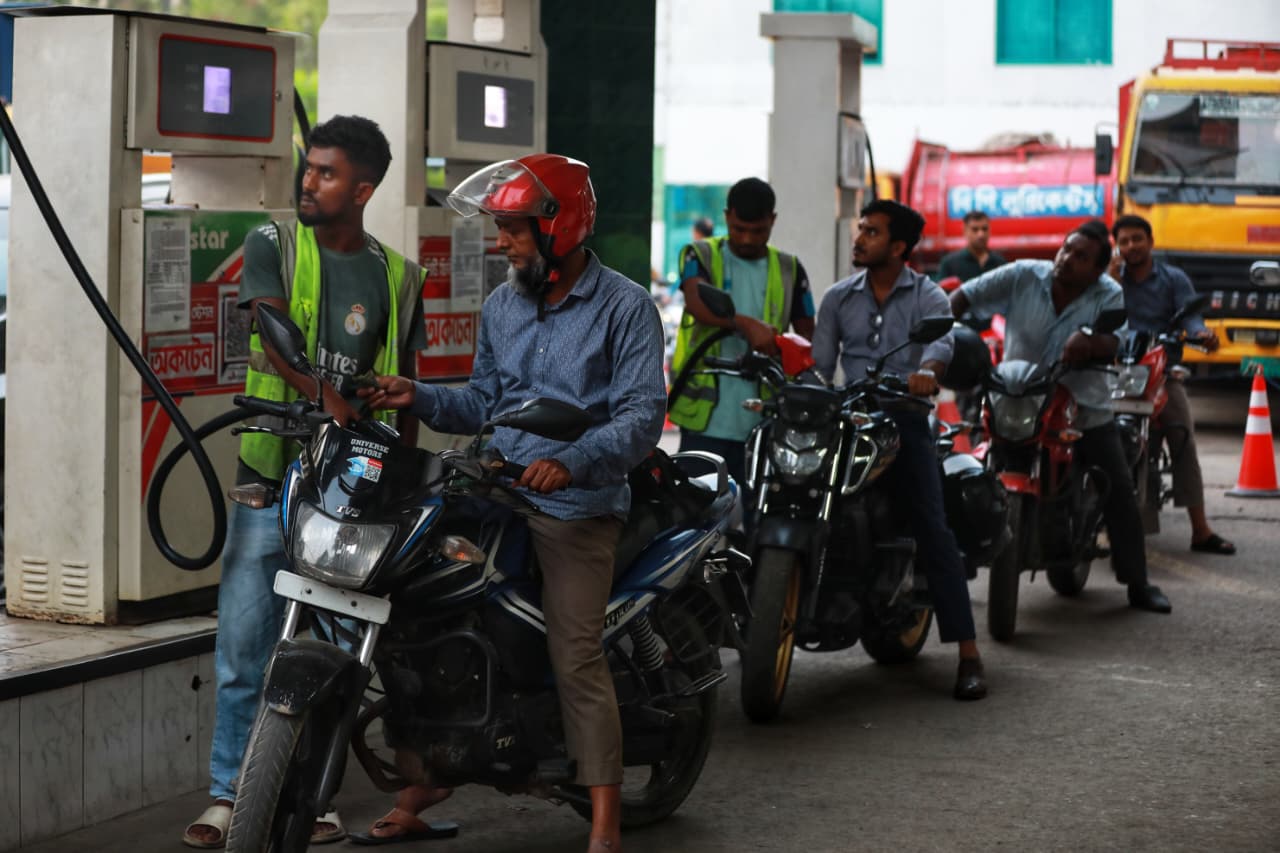
A worsening fuel crisis in Bangladesh is driving a growing number of motorcyclists to adopt a risky workaround: converting their bikes to run on liquefied petroleum gas (LPG), the same fuel commonly used for cooking.
Across the capital, from Mirpur’s backstreet workshops to roadside garages, mechanics are openly fitting unapproved LPG cylinders onto motorcycles — despite the clear legal and safety concerns. The practice, once confined to border towns such as Chapainawabganj in the 2010s, has surged in recent months as queues at petrol stations lengthen and fuel prices bite.
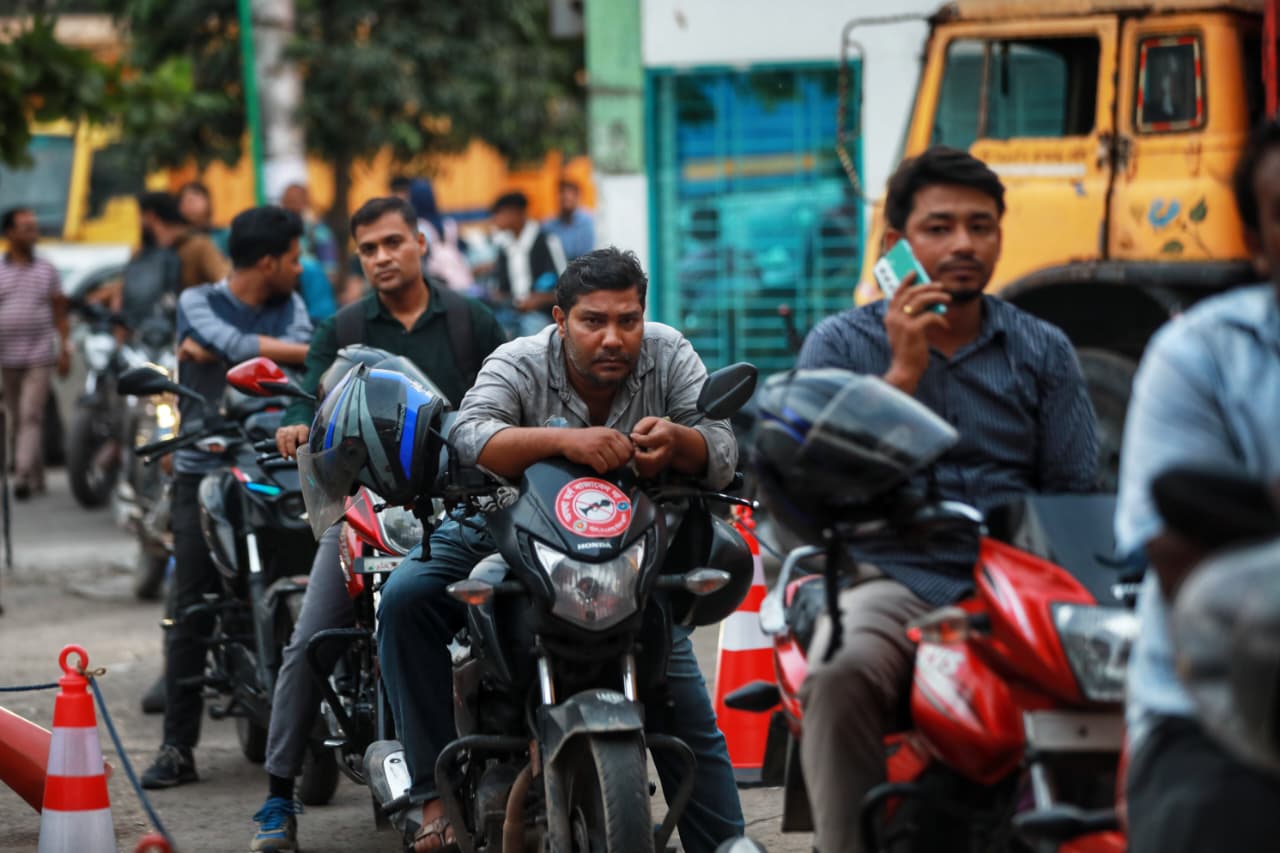
Bangladesh is home to an estimated 4.5 million motorcycles, many of them used by ride-hailing drivers who say their livelihoods are under strain. For them, LPG offers a tempting alternative: cheaper, widely available, and not subject to the same supply disruptions as petrol.
Mizanur Rahman, a ride-sharing driver waiting outside a Mirpur workshop, said the conversion promises to cut his fuel cost by half. “If I spend Tk 200 on octane, gas costs around Tk 100.”
The economics are compelling. The risks, experts say, are not.
Recent years have seen a series of deadly LPG-related incidents in Bangladesh. In 2024, a cylinder leak in Gazipur triggered a flash fire that killed 16 people. Safety specialists warn that installing pressurised gas cylinders on motorcycles — often near the rider’s seat — creates a highly volatile hazard.
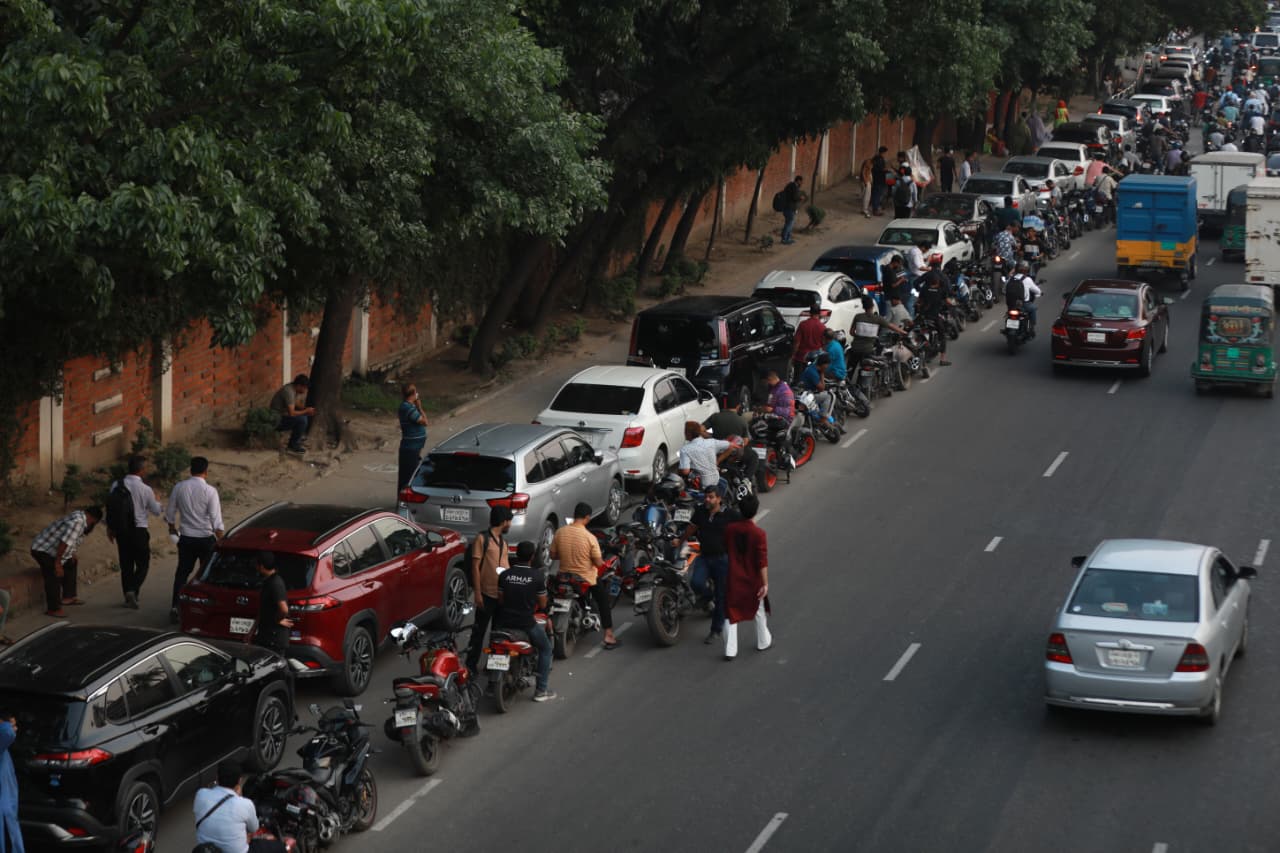
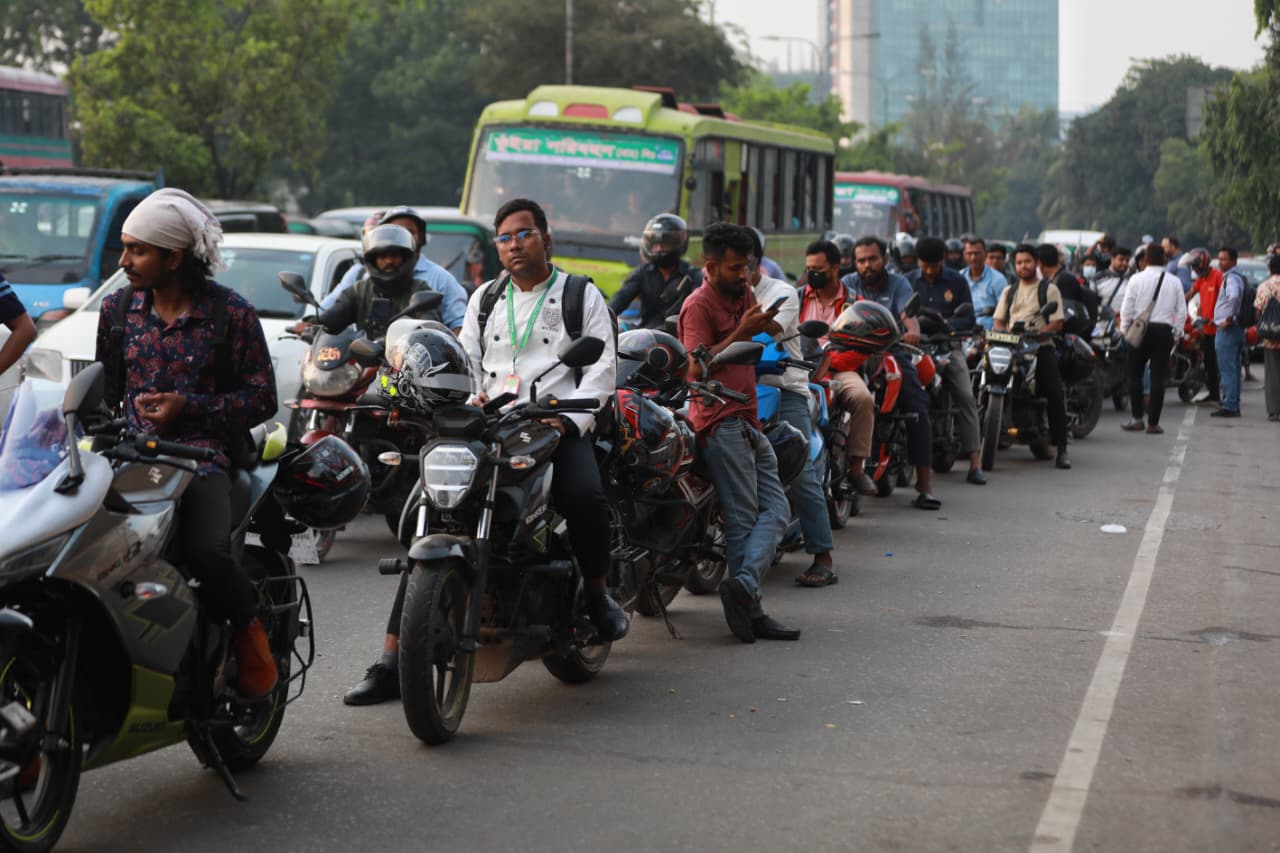
Several hundred bikers wait for hours to refuel their vehicles within a kilometre of the Prime Minister's office in Dhaka's Tejgaon. Photograph: Jibon Ahmed/Netra News
Workshop owners, however, play down the dangers. Sohel Rana, who runs a conversion shop in Mirpur, insisted the systems are safe. “Even if there is a leak, it doesn’t explode,” he said.
Experts don’t agree.
“There is absolutely no chance that leaking gas will turn to ice,” said Dr Md Easir Arafat Khan, a professor of chemical engineering at the Bangladesh University of Engineering and Technology. “The gas will escape, expand and form a combustible cloud right between the rider’s legs.”
“All it takes is a spark — from engine friction or even a scrape on the road — and it can ignite instantly,” he added. “In most cases, the rider would have no time to jump off.”
Riders themselves acknowledge the gamble. “If we skid or fall, it can be very dangerous,” Rahman said. Yet for many, the calculation is shaped by necessity.
“Unregistered vehicles are everywhere on the roads,” said Rafiqul Alam, another customer at the workshop. “We know this is not legal, but we are doing it to survive.”
Safer alternatives exist in theory. Electric motorcycles, which eliminate fuel dependence altogether, have been promoted as a long-term solution. But adoption remains slow.
Riders cite frequent power cuts, a lack of public charging infrastructure, and bureaucratic hurdles in registering electric bikes. Industry players say some of those concerns are outdated, noting that the Bangladesh Road Transport Authority has eased registration procedures in recent years.
Experts argue that broader policy support is needed. Khan suggested the government could encourage solar-powered charging stations on public buildings to reduce pressure on the national grid and attract private investment.
For now, however, many riders are choosing immediate savings over long-term safety — a sign of how deeply the fuel crisis is being felt on Bangladesh’s streets.●