Bangladesh’s garment workers face a bare-bones Eid
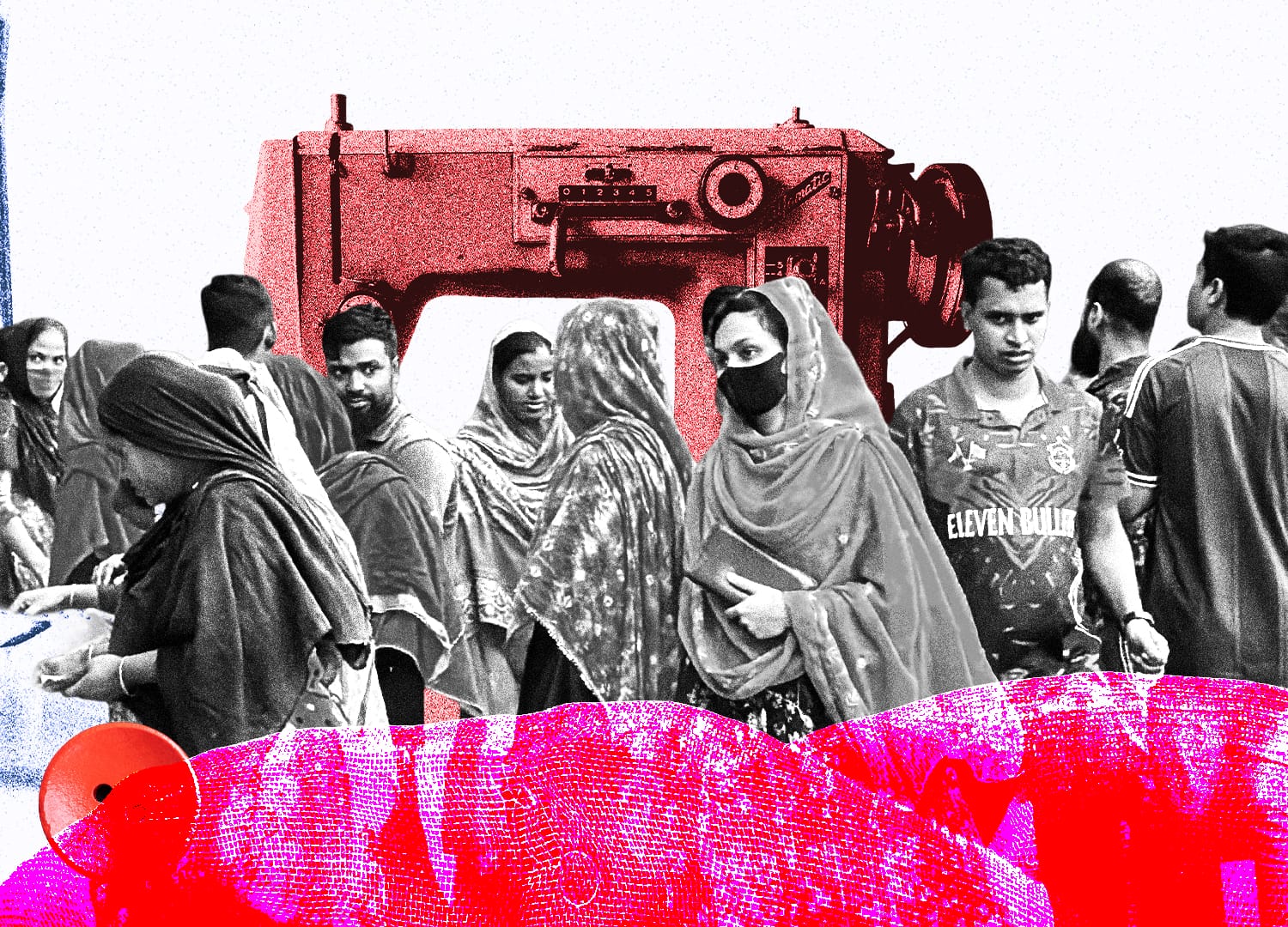
For millions of workers — the labour behind the ready-made garment industry often cited as the “main driving force” of the country’s economy — the reality of this holiday season is stark.
By the first week of March, with Eid-Ul-Fitr approaching, a festive mood had fully set in. Streets grew more crowded, traffic thickened, markets stayed open late into the night as many families across the capital prepared to mark the year’s biggest celebration — and its peak season for spending on clothes and travel.
But for millions of garment workers — the labour behind the ready-made garment industry often cited as the “main driving force” of the country’s economy — the reality is starkly different. The holiday is measured not in celebration, but in wages, bonuses, and the struggle to secure their full pay on time.
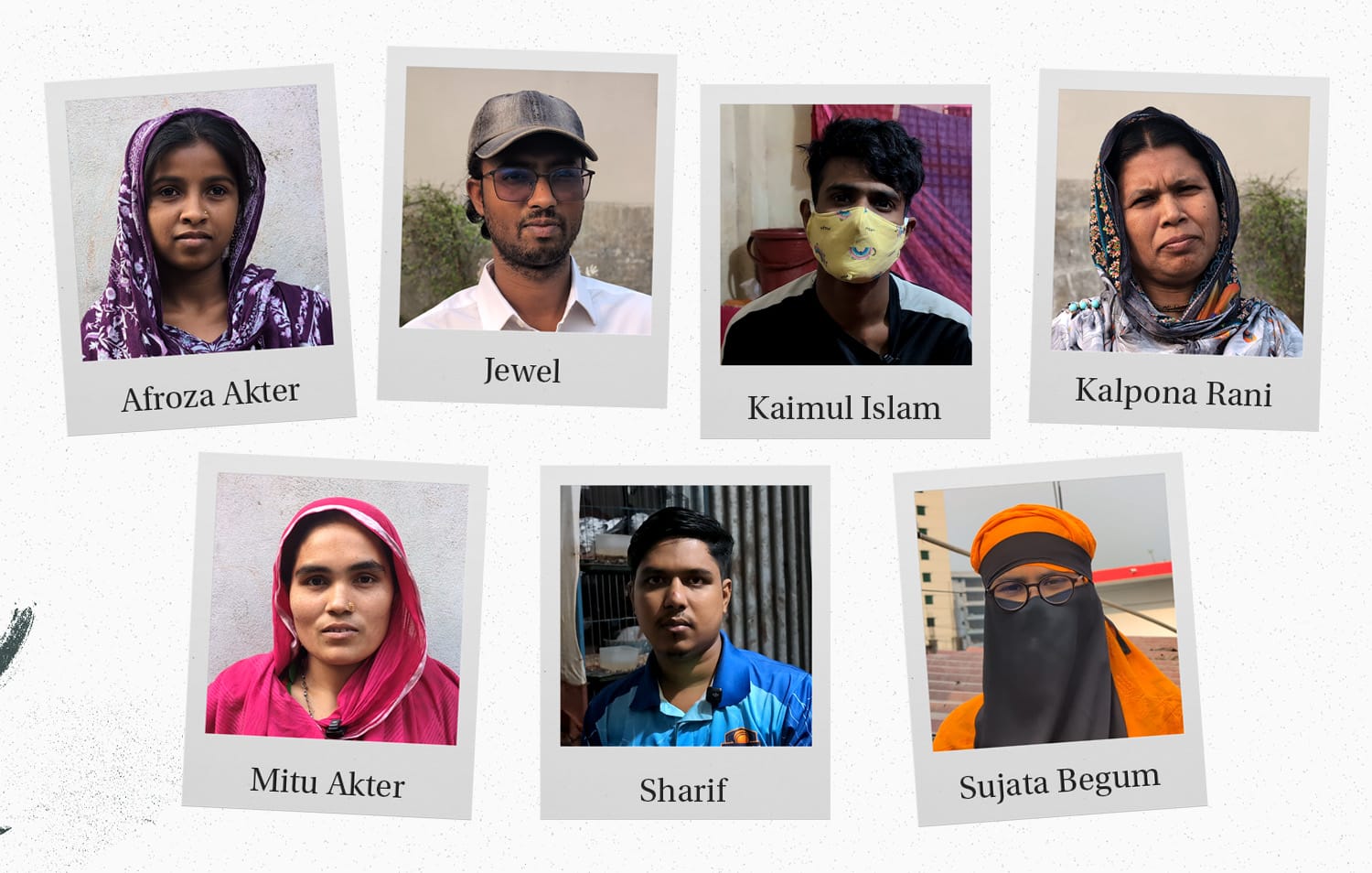
“The salary I get is not enough. If I pay rent and buy daily necessities, there’s nothing left. If I buy something for myself, I can’t buy for others,” said a 19-year-old Afroza Akter.
Afroza works at a factory in Gazipur for three months earning a monthly salary of Tk 13,500, barely enough to cover basic needs, even when combined with her husband’s meagre income as a street vendor. She said she will not receive an Eid bonus.
Netra News spoke with more than 20 garment workers in Gazipur, one of the main garment factory hubs in the country. They unanimously spoke of anxiety and uncertainty, reflecting how, for them, the joy of Eid feels like a distant luxury barred by financial constraints.
By the numbers
“I bought a few things for the boys. Eid matters for them. Now with the salary we receive, we can’t dare to buy anything for ourselves,” said Mitu Akter, a sewing operator.
Mitu’s monthly salary is Tk 14,800. More than Eid shopping, she was concerned about travel fare. On March 15th, she confirmed a Tk 500 Eid bonus on account of working in the factory for less than six months — and that only on the day before Eid she will know if her March salary clears, allowing her to spend Eid with her children.
The 25-year-old recently moved to Dhaka with her day-labourer husband leaving her two sons — aged 10 and 18 months respectively — with her relatives in her hometown in Mymensingh.
A 38-year-old Sujata Begum, earns a monthly salary of Tk 14,000. On March 15th, she received an Eid bonus of Tk 2,100. Before thinking about Eid shopping, Sujata must first sort out basic expenses including house rent of Tk 4,500 and her son’s university expenses and fees, which can go up to Tk 11,500 a month. “When I add everything together, my salary is finished … there’s almost nothing left,” she added.
Rozina Khatun, a mother of two, can no longer work in a registered factory due to health complications. “I supported my three siblings and my mother through garment work,” said Rozina, who now works in a subcontract factory earning around Tk 14,500 a month. The arrangement, she said, allows her to take leave when needed and be paid for the days she is able to work — flexibility she cannot find in registered factories.
This Eid, she received no bonus. “And I have to use [February] salary to repay loans.” Her voice carries a quiet resignation. “Others can buy clothes for their children. I cannot,” Rozina, added.
Mahmud Hasan Khan Babu, president of the top industry lobby, the Bangladesh Garment Manufacturers and Exporters Association (BGMEA), said that subcontract factories are not directly under BGMEA membership, meaning they fall under government monitoring rather than the apex trade body.
Gross vs basic salary
“I don’t even feel like I have an Eid. I support a family of three. If I get Tk 20,000 this month in total — I’ll pay Tk 5,000 in rent and Tk 5,000 in grocery shopping to clear pending bills. Then I am left with Tk 10,000 to cover daily necessities,” said Sharif, a 25-year-old unmarried junior operator in a Gazipur garment factory.
Sharif has been working in the sector for six years. His monthly salary is just over Tk 15,000. “Now you tell me, how will I buy Eid things? How will I travel home?,” he told Netra News earlier in the month.
According to Sharif, his Eid bonus is calculated based on his basic salary of Tk 8,792 and for the last five years, he received an Eid bonus of Tk 4,800. On March 15th this year, he received Tk 7,819 for the first time in Eid bonus.
“The bonus is calculated as half of the basic salary. Why not from the gross salary? This clearly cheats the workers. Bonuses are meant to give people a little extra joy,” said Kalpona Akter, founder and executive director of the Bangladesh Center for Worker Solidarity.
She also noted that the current minimum wage of Tk 12,500 is not enough to support even a small family. “People work to escape poverty. But our garment workers remain trapped in poverty doing this work.”
When asked whether there are any guidelines on Eid bonuses for workers, Soma Roy, Deputy Inspector General (Monitoring and Evaluation) at the Department of Inspection for Factories and Establishments (DIFE), said the agency does not have any.
When factory shutters come down
Rabab Fashion Industry Limited factory in Gazipur suddenly closed around mid-February leaving around 700 garment workers in a lurch. Netra News spoke with several of them.
“We were told the factory would reopen on Monday [after election day]. When we came back, it was still closed. Later, we saw a layoff notice,” Kaimul Islam told Netra News on March 3rd.
“We haven’t done any Eid shopping. I don’t think it will happen anymore,” he added.
One female garment worker, who shares Kaimul’s fate, requested anonymity. She broke down in tears expressing her anxiety about finding a new job in the middle of the holiday season. She also said she had no money to travel to her hometown for Eid.
On March 5th, BGMEA president Mahmud Hasan Khan Babu assured that he will look into the case of Rabab Fashion Industry Limited in an interview with Netra News. On my way exiting the building, I came across several garment workers downstairs. They said they all lost their jobs on December 4th last year when Ultimate Fashion Limited shuttered without any prior notice.
“We have approached buyers, BGMEA, and government labour offices and even visited the owner’s house seeking payment,” said Jewel. Despite the factory’s repeated promises to clear all dues by February 20th 2026, these laid-off workers did not find any respite.
With Eid approaching, many of them said they are struggling to cope. “We have to go home for Eid, but if we don’t receive our money, how will we go?” said Kalpona Rani.
On March 13th, they received half the payment.
Netra News contacted Rabab Fashion Industries Ltd. and Ultimate Fashion Ltd. via email for comment on the factory closures and arrangements in place to clear the workers’ dues. Neither responded at the time of the publication.
By the contradicting numbers
Authorities and industry groups provided different estimates of the number of garment factories that may incur wage or bonus disputes, meaning they fail to pay their workers on time ahead of Eid. According to data shared with Netra News by the industrial police, Gazipur has 58 factories identified as at risk among 2,806 in total, while Ashulia has 78 factories at risk out of 1,593, Narayanganj has 28 out of 1,884, Chittagong has 45 out of 570, and Mymensingh has 40 out of 290.
At the same time, the Department of Inspection for Factories and Establishments (DIFE) said around 120 to 150 factories across the country may face wage-related risks. This figure lowered when speaking with the BGMEA president. “Our field monitors are working closely with factories. The number of factories with potential wage or bonus problems has come down to 39, and we are resolving issues daily,” he said.
In a press briefing held on March 18th, the BGMEA president announced that 99.91% of garment factories have successfully cleared February salaries and 99.81% of factories have completed bonus disbursements. He also added that, despite no legal obligation, 64.03% of factories have provided partial advance salaries for March.
Labour rights activist Kalpona Akter argued that the number of factories at wage-related risks, in reality, is much higher than the aforementioned figures. “If you visit any industrial belt, you will find 8-10 factories, and workers with due payments.” The core problem lies in the weak enforcement of existing labour laws, she stressed, which clearly specify when wages and bonuses must be paid. If monitoring agencies and government institutions — particularly the DIFE — effectively enforce these rules, such disputes would not arise.
“Owners often say they don’t have money or business is slow. But if you cannot run a business or pay your workers, who asked you to become an entrepreneur? No one forced you into it,” she said.●