Counting life on the Manta fleet
Born on boats and buried by the banks, Bangladesh’s Manta community continues to weather the harsh realities of landlessness. A Netra News staff correspondent explores their life on water.
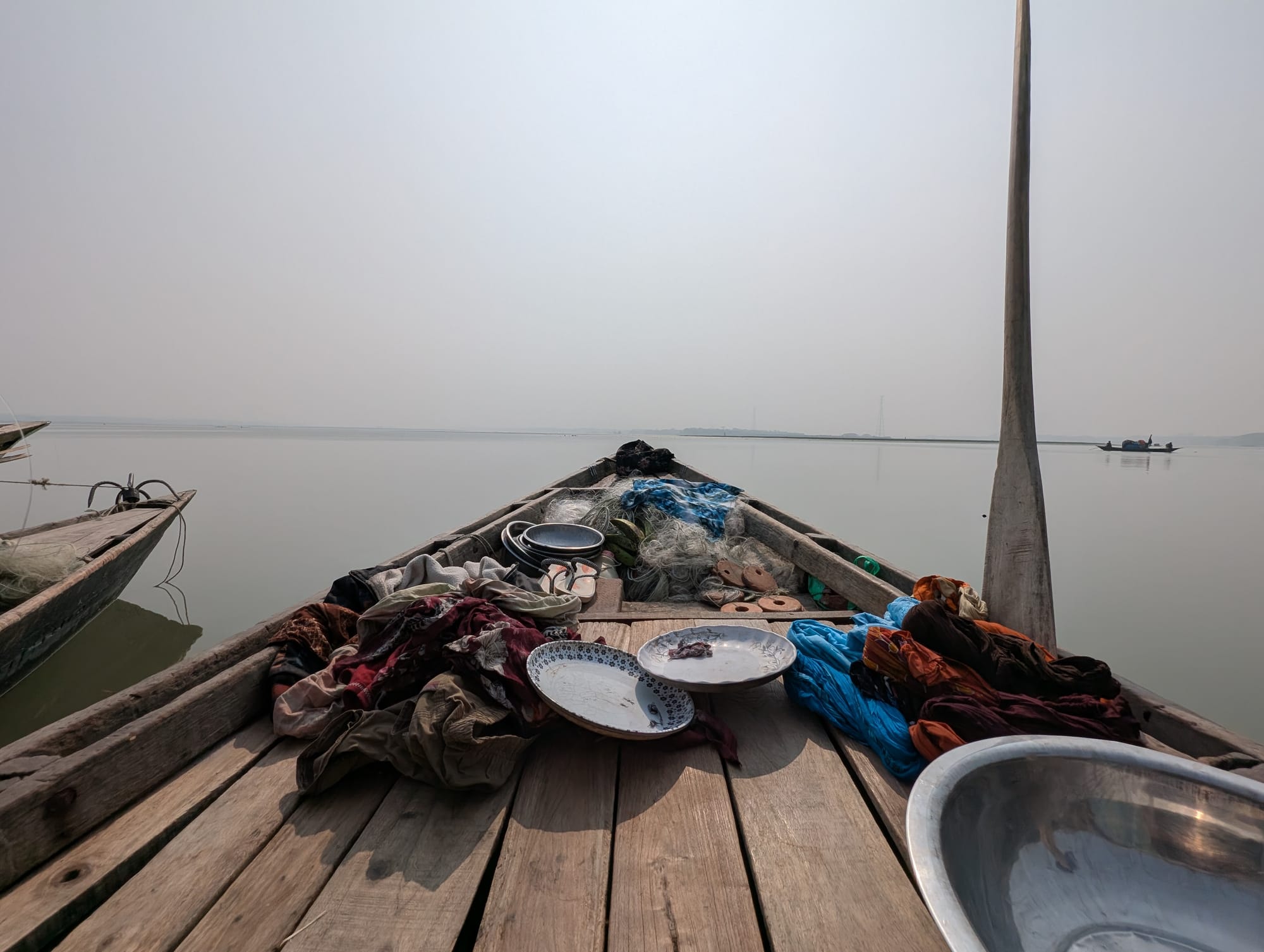
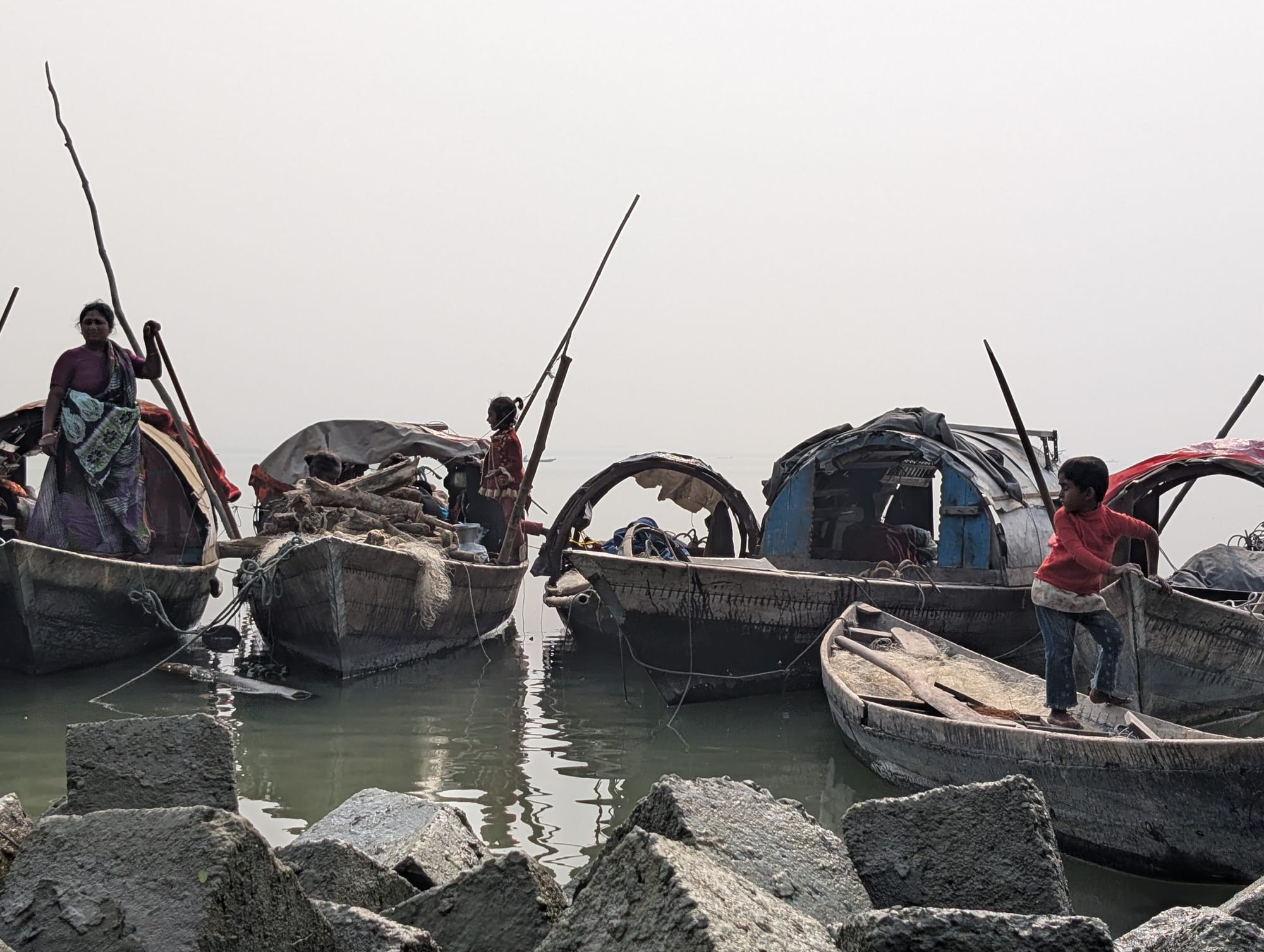
On a Wednesday in January, the morning broke through a foggy breeze. Standing on the bank of the Kirtankhola River, I saw rows of wooden boats swaying in the river draft. I also saw women and children in their small, floating houses. To the people of Barishal, those firmly rooted in the mainland, these families are known as bebaijja — an epithet for the displaced; otherwise, known as the Manta people, river nomads of Bangladesh.
I came across 17 such families that day on the riverbank at Taltoli, Bhangar Par, Barishal sadar upazila. Each boat, measuring only 10 to 12 square meters, housed one family. To move from one end to the other, one must crouch low and crawl on one's knees. Every movement demands precision and caution, especially for the uninitiated, because life hangs in the balance, quite literally. A misplaced step, a lean too far to one side, or the slightest shift in weight could tip the boat without warning, spilling all inhabitants into the river below.
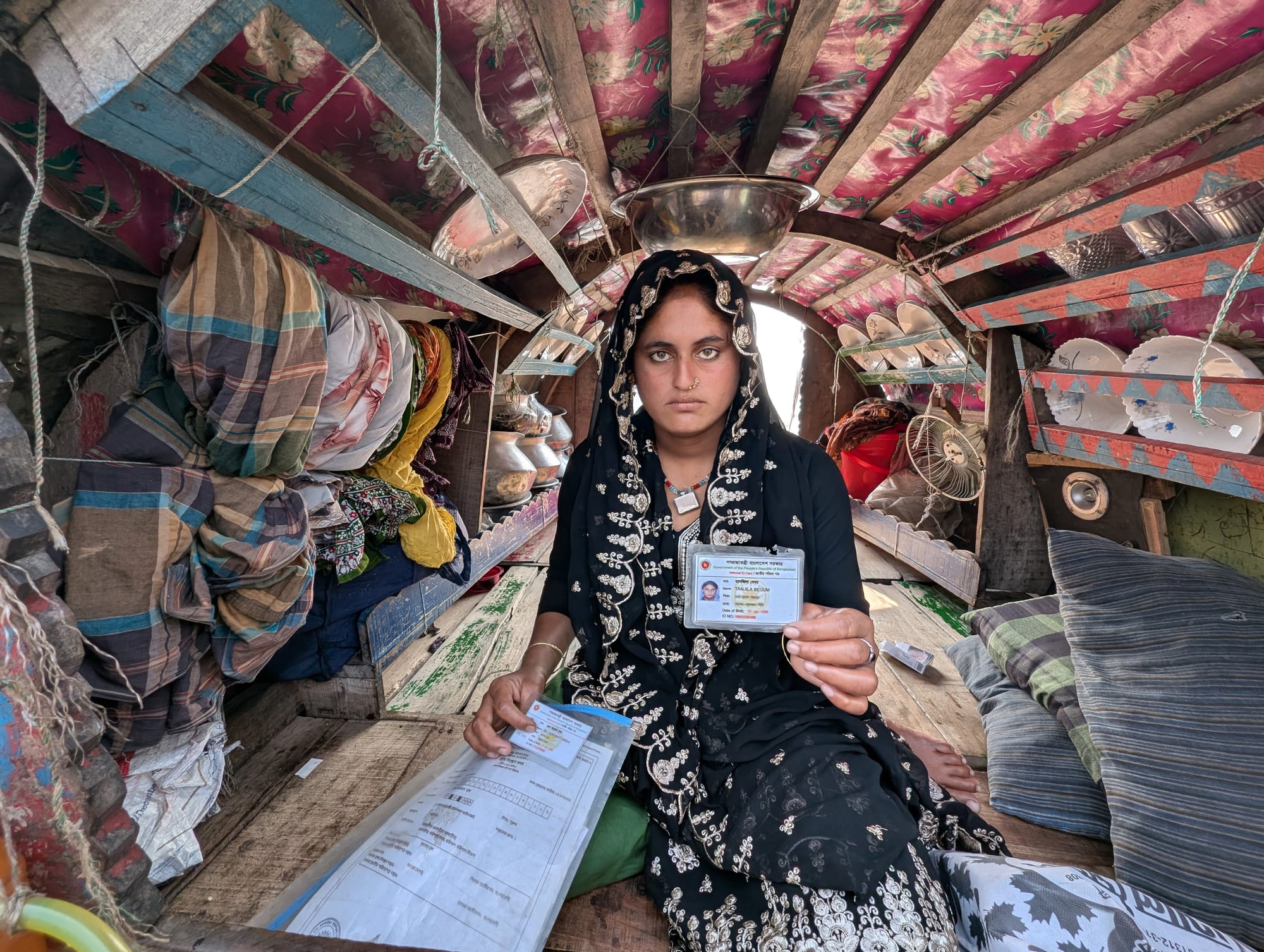
Soon, I met Tanjua Manta, who was born and raised on the boats, like her parents. The 25-year-old was sitting on the deck of her small boat. Inside, I found the belongings of four family members, including clothes, pillows, firewood for cooking, a clay stove, plates and glasses, pots, fishing nets, food supplies, and more.
I immediately noticed something unique to the reality of the Manta people. In one hand, Tanjua firmly held one end of a rope. The other end was tied around her baby’s wrist. I have never seen such a thing. She explained to me that this is a common tactic among the Manta people to ensure that their children — particularly infants who are at the crawling stage — do not fall into the river. The parents know too well how quickly the river swallows the child if they slip into the water, rendering rescue missions hopeless.
The Manta children’s first steps are taken on the narrow decks of the boats. Once a Manta child learns to toddle, the parents’ fear grows thicker. To safeguard them, parents tie a jhunjhuni (a small bell) to the children’s wrists, waists, or ankles with a rope. But that is not always enough. Ilias Manta, a father who lost his three-year-old child, told me how he still lives in constant fear for the life of his remaining daughter. The river took his son’s life three years ago.
A Manta fleet with fewer than a dozen boat at the banks of Kirtankhola River. Video: Netra News
A life on water
The Manta people tend to fish using small nets and traditional hooks. They set out at dawn and return in the evening with whatever the river yields. And every boat fleet — made up of 10 to 50 boats — is led by a sardar (leader) who oversees their daily affairs. One sardar told me that the biggest fleet he had seen consisted of 100 boats.
The Manta girls shoulder many responsibilities — fishing, cooking, navigating the boats, and caring for their younger siblings. Typically, by age 14 or 15, they get married. The customs of marriage are just as unconventional as the lives they lead. If a man chooses a woman, he simply brings her from her father’s boat onto his own, and just like that, they are married. Conversely, the marriage is considered dissolved if the husband sends her back to her father’s boat.
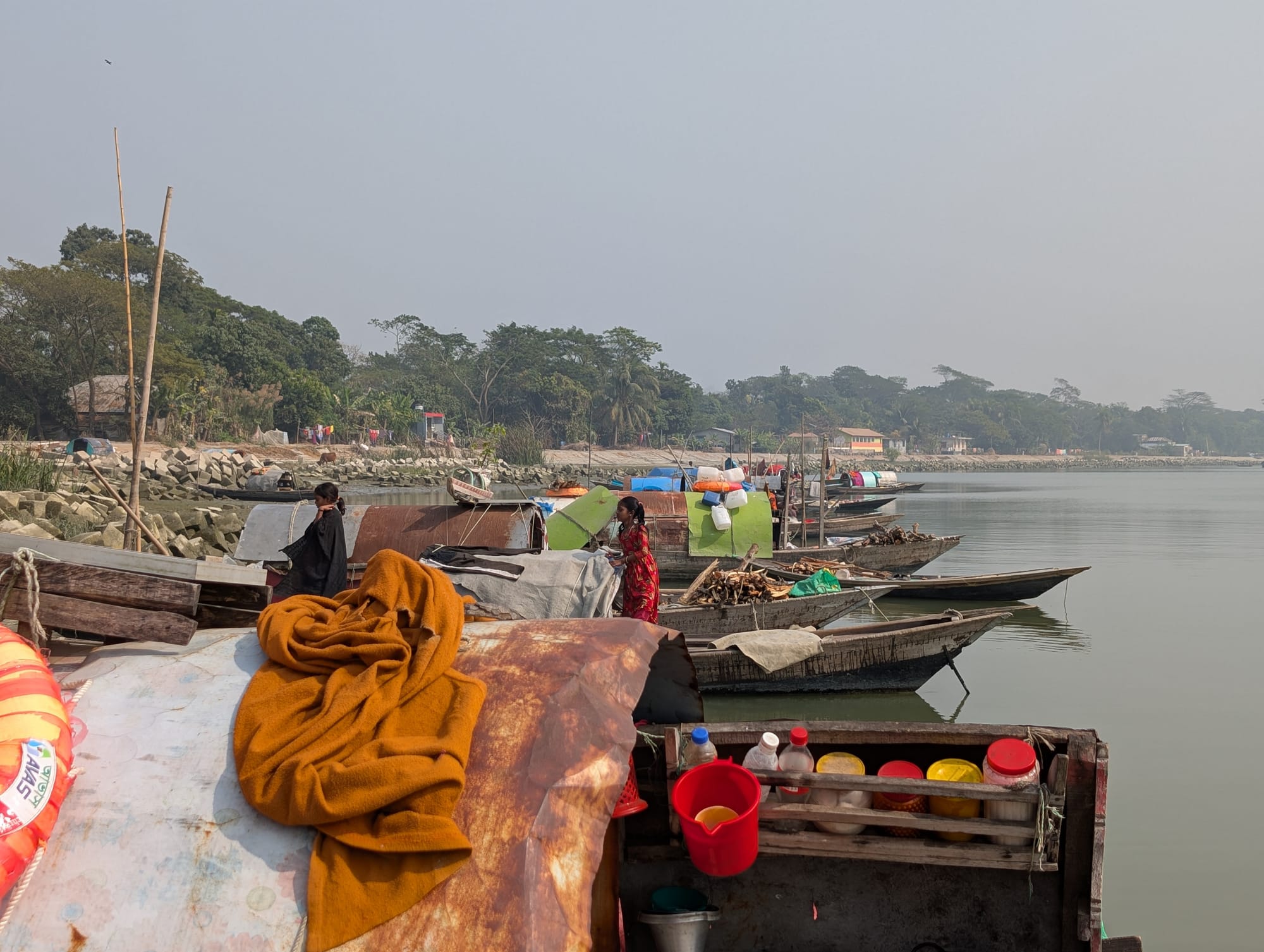
The Manta women work alongside men as equals, rowing, casting, and weaving nets, painting boats, and fishing. They also manage all of the household responsibilities — cooking, cleaning, and raising the children. Manta women give birth on the boats, entirely without medical assistance.
During the sweltering heat of summer, the husband tends to sleep on the open deck while the wife and children stay indoors, meaning under the chhoi (the woven bamboo structure forming a roof, arched over the middle of the boat). And during the monsoon season, the Manta family cannot light their stove to cook, often forcing them to go without food. 39-year-old Rashida Manta described winter as bitter and cold. She said, “We don’t even receive a single blanket [from the government].”
Aerial shot of a small Manta fleet in Barishal. Video: Netra News
Across all seasons, the river nomads get sick with diarrhea, fever, and constant cold from drinking the river water. If the weather allows, their social life flourishes on the decks. The women gather, the elders speak, and the young sit as an obedient audience. This is where stories are shared, tales are told.
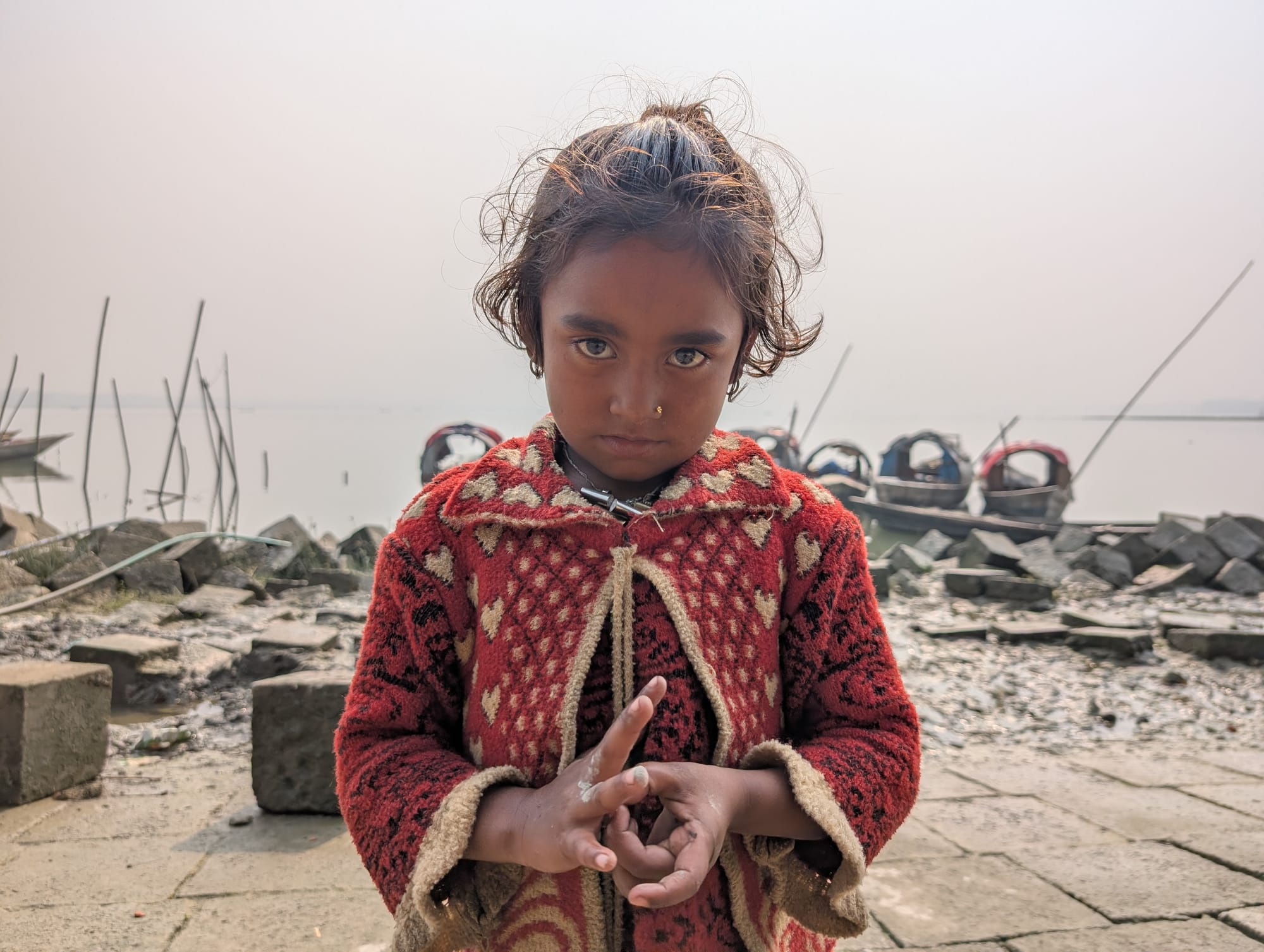
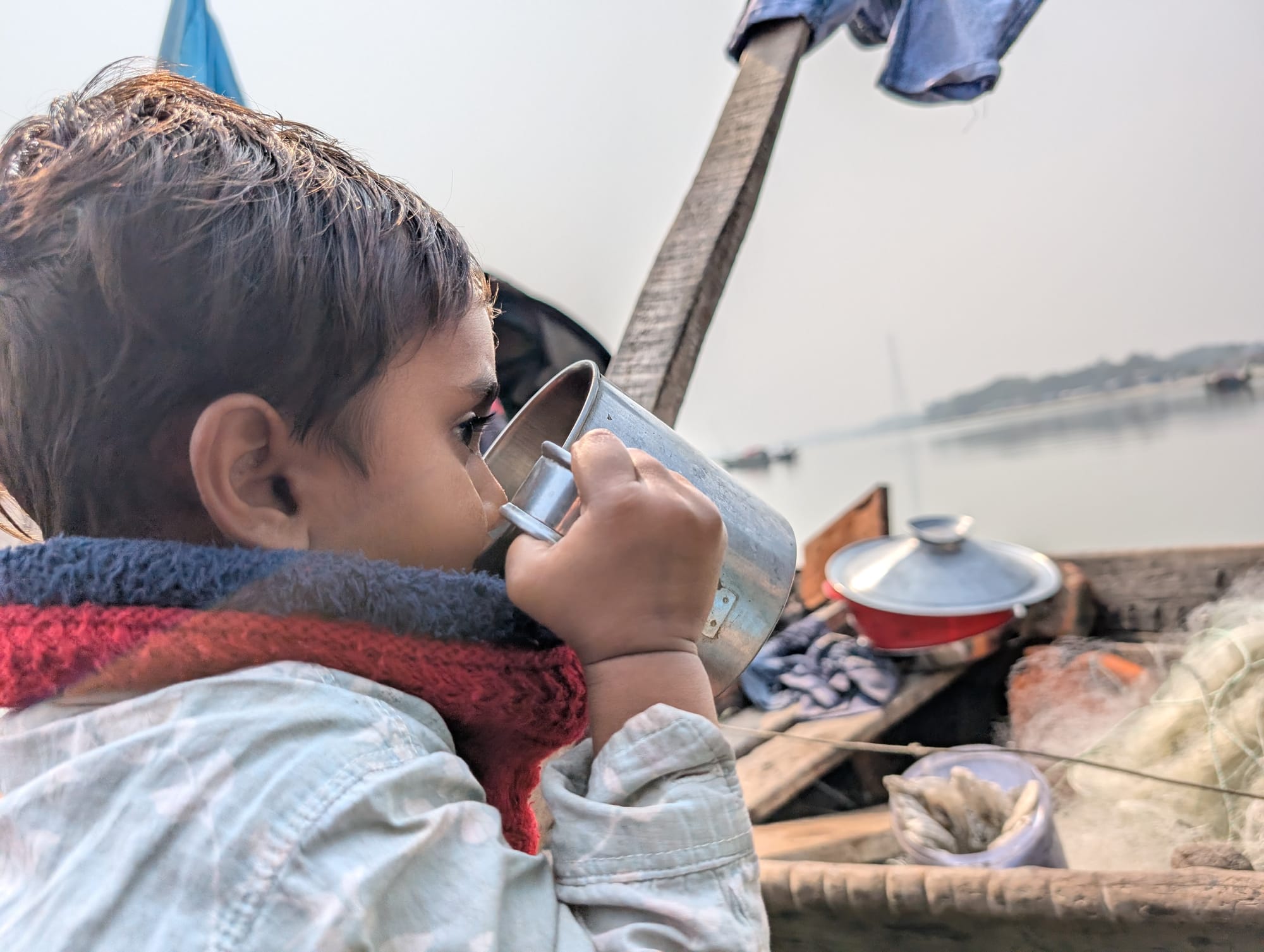
For the children, a life on the water limits their world of friendship to only the neighboring boats. But their hearts yearn for the mainland. I saw that yearning in seven-year-old Rakib and six-year-olds Imran and Bithi. They were lost in their world — kneading mud, pulling at grass, and chasing a stray hen. Their eyes flashed excitement, the wondrous kind, unique to children.
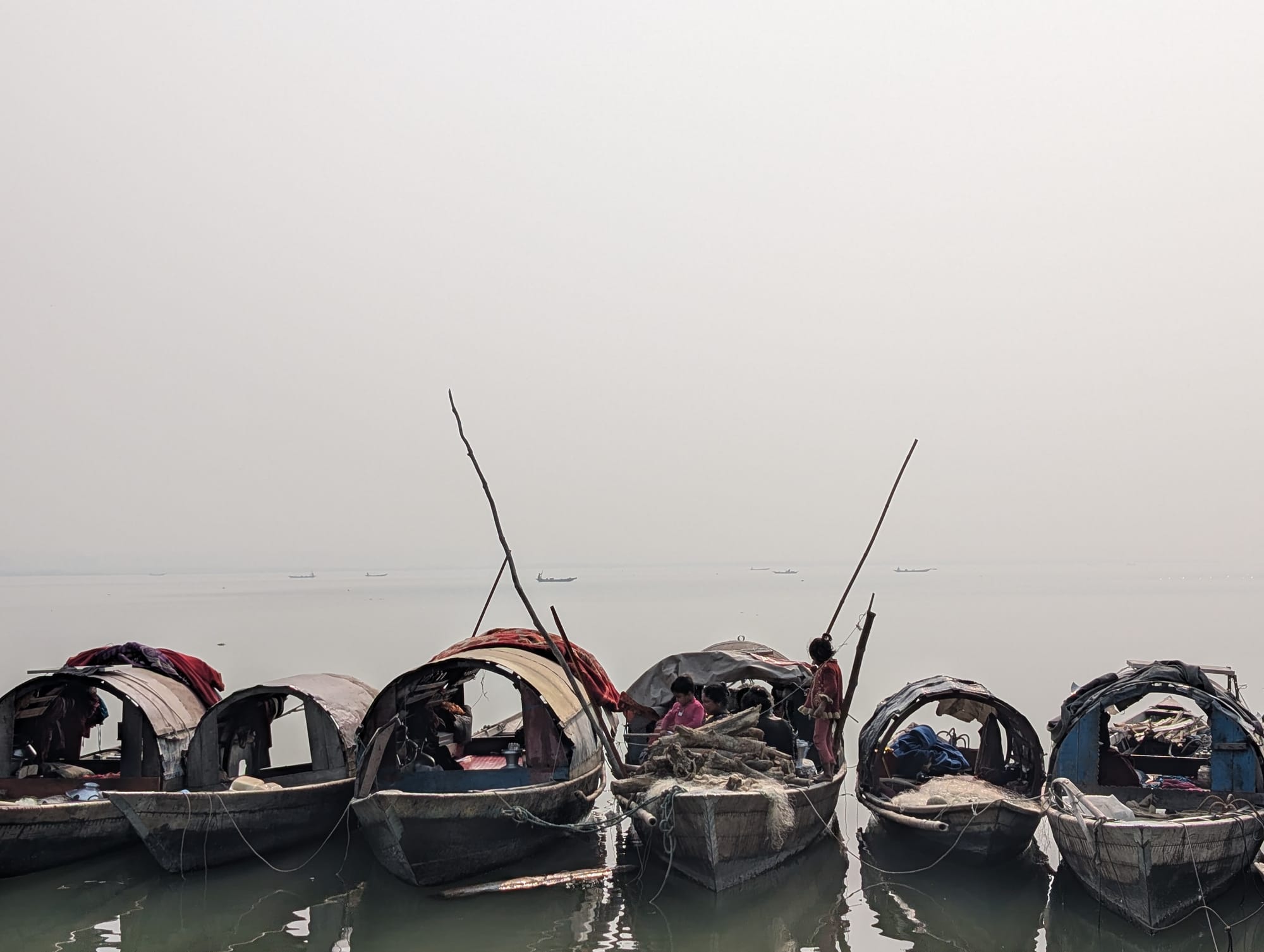
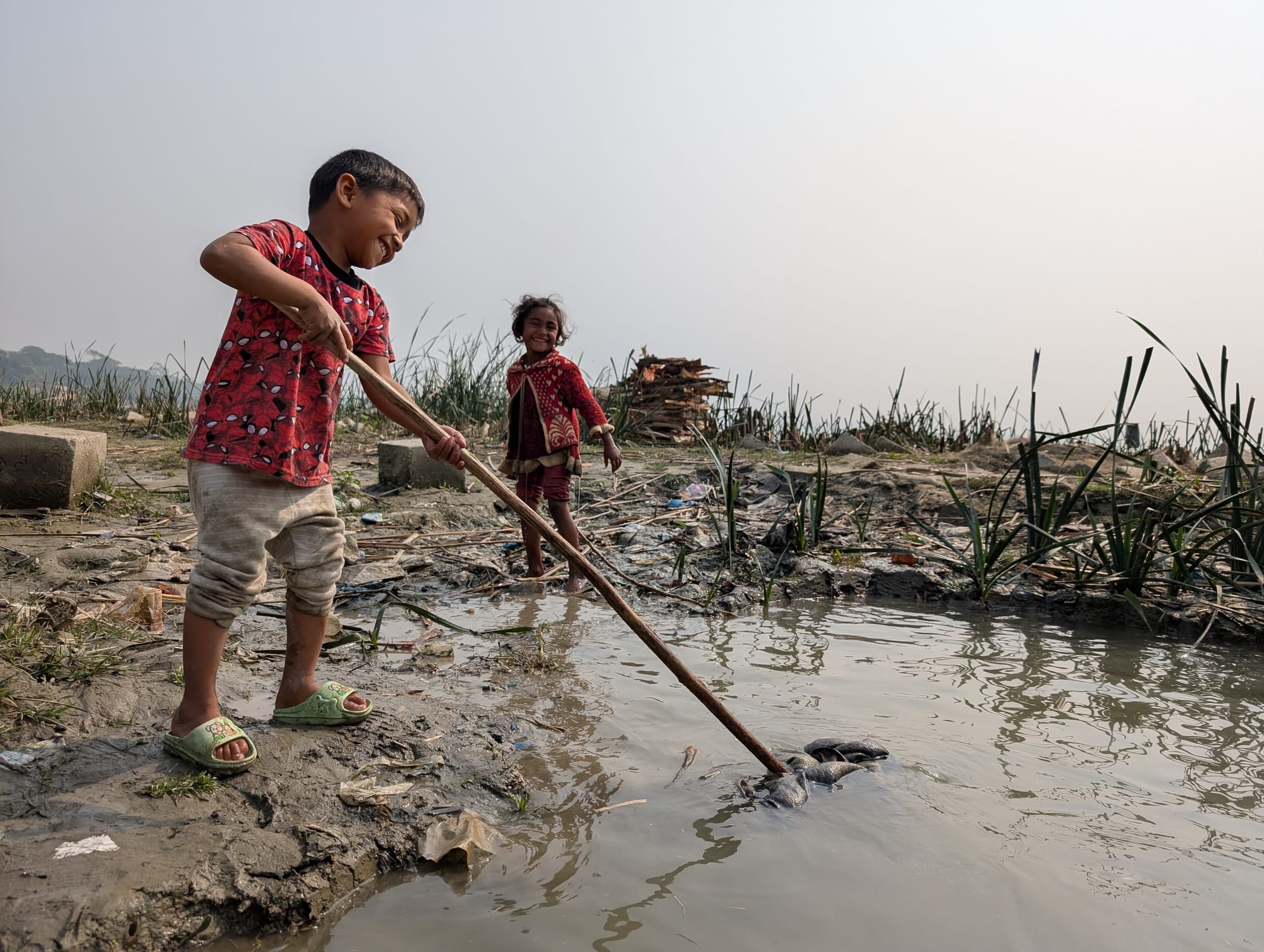
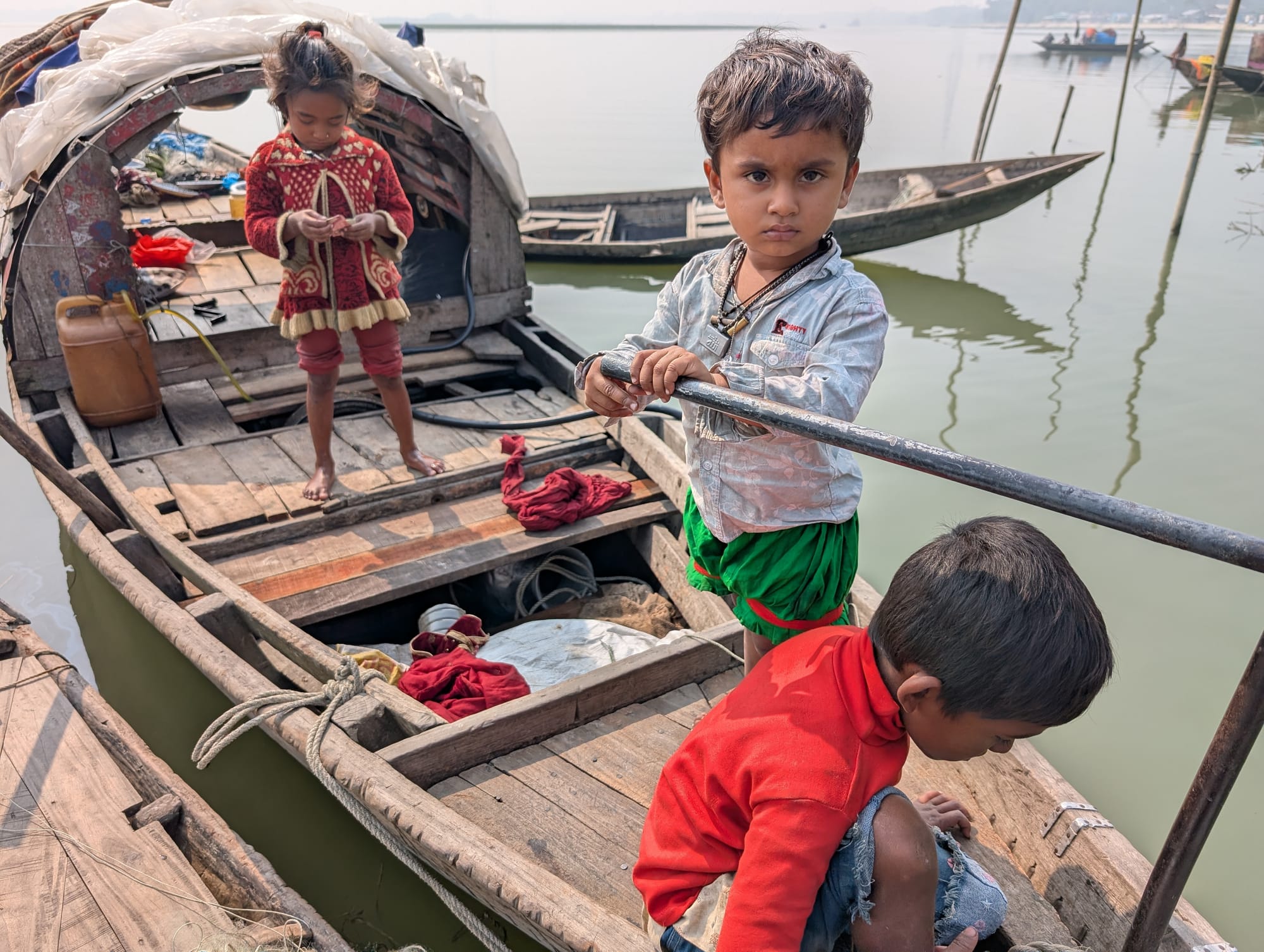
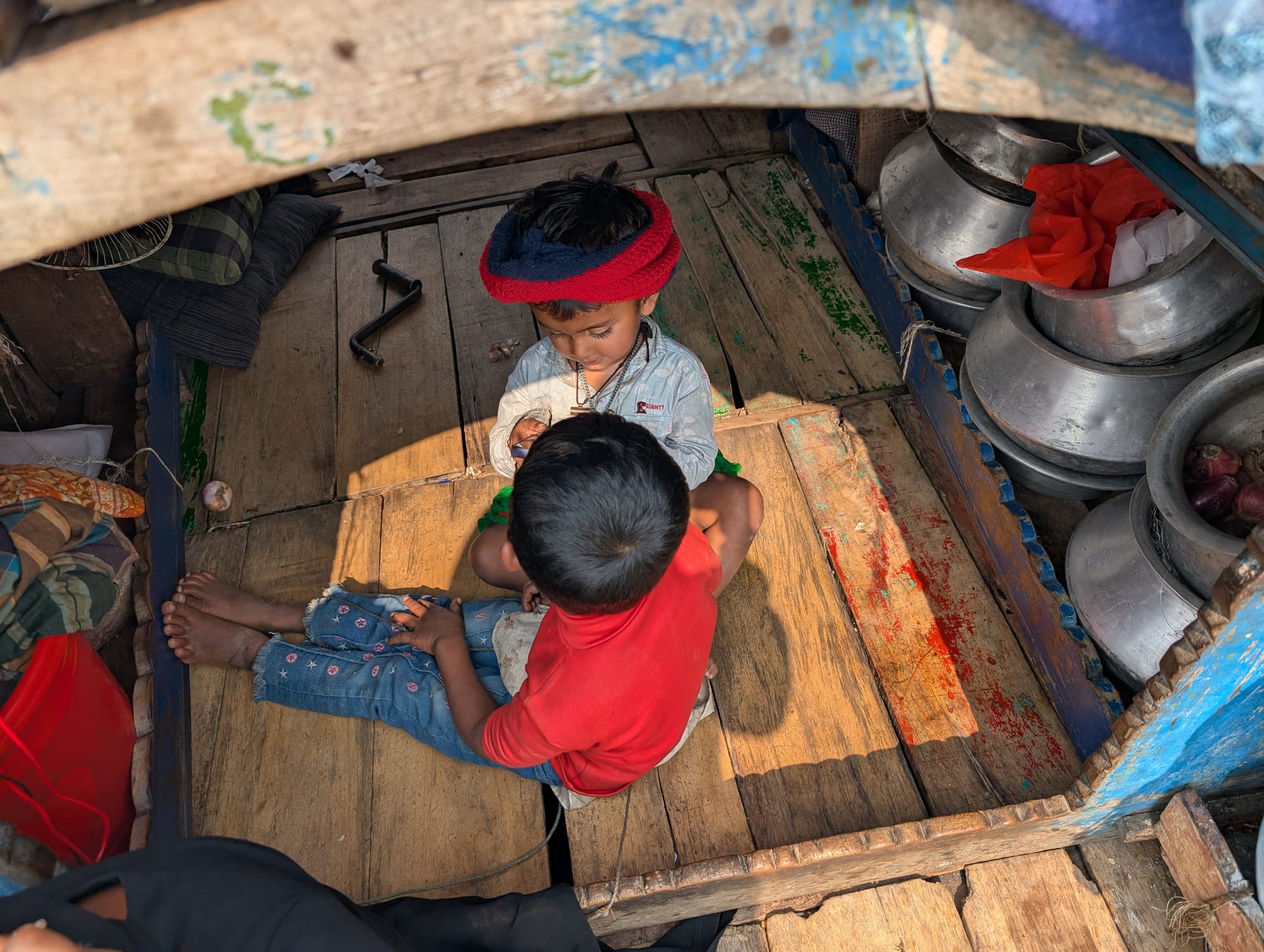
For Manta kids, the deck of a boat is their only playground. Growing up on the water means their world of friendship is defined by the neighbors anchored nearby. Photograph: Marzia Hashmi Momo/Netra News
A life outside the state’s protection
According to a 2023 report by the International Centre for Climate Change and Development (ICCAD), approximately 300,000 Manta people live on their boats in Bangladesh. The report also states that most of these people lost their lands to riverbank erosion decades ago. The river nomads’ lives are entirely woven in the drift between the river’s edge and the edges of society. Tanjua pointed out to me how they do not find shelter on land, even during disasters — an isolatory reality it seems.
Manta children have skinny bodies, mostly as a result of malnutrition. I saw several children wearing amulets around their necks. The parents believe these will protect their child from illness, drowning, and other dangers. The amulets are generally sourced from the Manta ojhas (traditional shamans).
I wondered what could possibly change the Manta people’s fate? What would protection from the state mean for them? For a start, school enrollment requires an address and a roof over one’s head. However, the life of the river nomads is one of constant motion on the water, drifting from one riverbank to the next when a better fishing spot is found.
In effect, the Manta children have been deprived of conventional education — such as school enrollments — for generations. Tanjua lamented, pointing to the villages on the land. “Could they not give us a small piece of land?” she asked, explaining how their wishes for a life on land could be fulfilled with government assistance. They could have educated their children, altered their livelihoods, and found stability. Bithi, Tanjua’s daughter, gazed at the homes on land along the riverbank and told me that the children there have books that she doesn’t have.
The process of providing National Identification (NID) cards to the Manta community began in 2008. Rashida Manta expressed her frustration to me. She explained that they were told the voter identification card would get them rice and other benefits but, she said, “After they take our votes, they do nothing.”
At the same time, many members of this community are yet to receive their NID cards. According to the Chandradip Development Society, 28 members of the Manta community living on the Kirtankhola River cast their votes for the first time during the 13th National Parliamentary Election in February 2026, and a total of 35 Manta people now hold voter ID cards. Samia Ali Onna, Executive Director of the Chandradip Development Society, told Netra News that approximately 50 to 60 more Manta individuals are currently in the process of obtaining their NID cards.
When the sun was about to set, I bid farewell to the river nomads. To me, they seem to display a unique depth of perseverance that this life on water warrants whilst the land has no room for them.
On March 27th, I spoke with Jashim Manta, a sardar representing 173 Manta families in Barishal’s Arial Kha river (the Manta people call it Aairkhali river), to ask about the prospect of acquiring “family cards” — a new social protection initiative launched on March 10th by the government, aiming to strengthen financial security for marginalised, poor, and lower-middle-income households. Jashim said they have not received any family cards yet, nor is he aware if any steps have been taken to include them.●