My doctors chose my sex. I chose to undo it.
Raised as a boy after doctors “corrected” her body, an intersex adult’s story of undoing a lifetime of medical decisions made without consent.
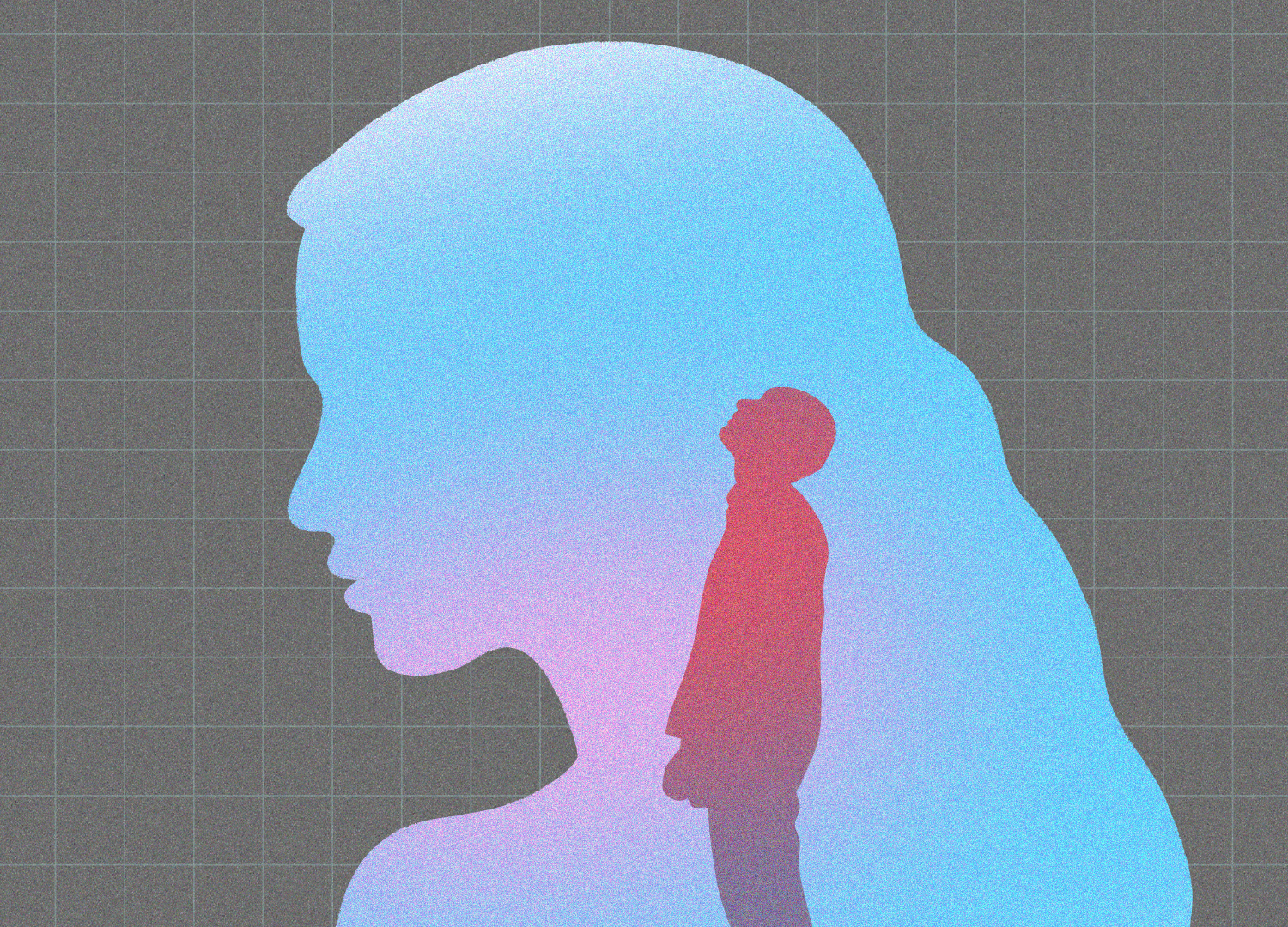
Pain. Blinding, searing pain. A cold bathroom floor. A catheter stabbing through my purple wounds. I lie on the ground, begging any god that can listen for an end to this suffering. For death and emptiness. Nothing happens. I recoil in agony. When you are in enough pain, you forget language. But you somehow still remember the word, “Ma.” Mother. So I scream, “Ma!” My mother rushes to my bathroom and calls an ambulance. Nurses arrive, injecting me with morphine. What the gods couldn’t do, morphine does — eases the pain until everything goes dark. As I pass out, I am somehow happy. This post-op pain is the small cost of my new vagina. If you are confused right now, it is okay. Here is the whole story.
For the first eighteen years of my life, I did not know who I was. Then, a few months after my 18th birthday, I demanded an explanation from my mother in a fit of justified rage. She struggled to hold back tears — she always got teary when I broached this topic — but then she did something she had never done before: she produced medical documents. My medical documents. I realised then that she had an explanation for my seemingly atypical body all along, but had hidden it from me.
As I perused the documents on that fateful day, my world collapsed. The documents were old. They classified me as a hermaphrodite. I would later learn the proper, more dignified term: intersex. But to those doctors, I was just an abnormal — stripped of my humanity, destined to be a freak. Until then, I was told I was just “a boy with problems,” and part of me believed it. But part of me ached to understand my body, certain it had its secrets. After all, I was living in this body; I could only be so ignorant. On that day, as I spiralled into the first major breakdown of my life, I wondered if ignorance was, indeed, bliss.
From the documents, I learnt I was born with a vagina, a rudimentary uterus, and ovaries with streak gonads. I also had clitoromegaly: my clitoris was atypically large. That is how they decided, after my birth, that I wasn’t a “regular” baby girl. My doctor in Bangladesh suggested that my parents take me to Thailand. In Thailand, they examined my chromosomes and my internal organs to determine my fate. It must have been quite the adventure to play god. I had XY chromosomes and a condition called XY gonadal dysgenesis or Swyer syndrome — one of more than forty intersex variations. But to my family and the doctors, variations were deviations. A body that did not fit into the binary of female or male was, to them, a freakish abomination. I had to be fixed. Fast.
The race to fix my body began. The first step was to choose a gender for me. An easy decision. Because of my streak gonads, I was infertile. How could an infertile person marry? Does it not all boil down to making babies? It was okay for a man to stay unmarried in my society, but not a woman. That would be scandalous. So it was decided that I was to be a man. At least that is how the story goes — according to my mother. No one cared that I had a vagina and not a penis; that most children with my condition are raised as girls; that it would have been a lot easier to raise me as a girl — or better yet, leave my body as it was and allow me the autonomy to decide what to do with it. My vagina was promptly closed in a surgery, and my ovaries and uterus were removed. The whole time, I was still a baby. I still have the scars.
“Corrective” surgeries on my body continued until I was fifteen. At fifteen, I was asked for the first time if I wanted any more surgeries, and I said no. The surgeries I had included constructive surgeries to make my clitoris more like a penis. The doctors weren’t quite successful, and I spent the entirety of my adolescence believing I was an incomplete, deformed male. Sometime during my teenage years, I learnt the word “freak,” and I decided it described me best. I grew up hating myself, and the children around me hated me too, since I was weak, hopeless at sports, and preferred spending time with books. My parents admitted me to the boys’ section of a gender-segregated school when I was around twelve. I am sure they believed it would suppress my effeminate ways, although I doubt they ever noticed their child’s “cross-dressing” habits. That would have been the end of me. Around that time, they started injecting me with testosterone every month.
I went to an Islamic school. They taught us that homosexuality was unnatural, forbidden. I was the most devout child in that classroom of seven boys. Six boys and me, I mean. When, at around thirteen, I began to long for the affection and touch of both female and male romantic interests, when I watched Twilight and found myself crushing on both Robert Pattinson and Kristen Stewart, my hate for myself only intensified. I considered myself a mentally ill, physically deformed man. Prayers did not fix me. Prayers, at least in my case, never fixed anything. I soon lost my faith in God and eventually, religion. I could not immediately stop praying, though. It just felt wrong. You know what else felt wrong? Sex.
Before I knew it, I was hurtling towards adulthood. I had loved several women and even more men by then, but I never dared to express my feelings. This was primarily because of one question: how would the sex work? I was physically incapable of topping the conventional way, so did that mean I would have to bottom? But I had no frontal opening. In a terrifying eureka moment, one day, I realised I had an anus — and that would have to be my primary sex organ. I spent several months in denial. I even considered becoming an ascetic, despite my atheism. In the end, I accepted my sexuality, but the overpowering self-hatred I had always had, still resurfaced from time to time. I would later learn that this was called internalised homophobia.
Then one day, a few months after I had turned eighteen, my mother let me read all my medical documents. For the first time ever, I learnt that I was born with a vagina. For the first time ever, I learnt that I was intersex. I was not a mere freak. My condition had a name. There was a natural explanation, and I was normal. I came of age that day. Ever since I was a child, I knew I did not neatly fit into the boxes of feminine and masculine. Sometimes I felt like a boy, sometimes a girl, sometimes both. This wasn’t just physical. It was psychological, too, from the very beginning. Reading my medical documents shook me to the core, yes, but it was, in retrospect, also a spiritual, Nirvana-esque experience for me. I realised that my body, much like my mind, did not fit the binary. Perhaps I wasn’t freakish; perhaps I was magical, transcendent.
I knew one thing: I had to reclaim my body. People call it sex reassignment surgery. For me, it was sex reclamation surgery. At the age of twenty-one, after finally convincing my parents I needed it, I flew back to Thailand, to have a new vagina constructed. I couldn’t have my old vagina, my old body back. But I could honour my younger self, with all her traumas, by allowing myself to live as the most authentic version of myself. That ideal image of me in my head happened to be a person with a vagina. So I had the surgery. It was painful, excruciatingly painful. It took months to heal, and I still struggle with complications.
I am writing this in November 2025, years after my surgery. I live in Dhaka with my wonderful partner as a genderfluid, intersex person, firmly as part of the best of what Bangladesh is and can be. I still struggle with self-hatred stemming from internalised homophobia and transmisogyny — the worst of what this world is and can be. It is a lifetime of unlearning and healing. Reclaiming my body, however, was the most difficult battle — and I won that battle. Everything else is doable.●
Sophie Sana is a Dhaka-based intersex writer and activist.