The children India sent back after detaining their parents
Hundreds of Bangladeshi children have been repatriated from India in recent years, many after being separated from parents detained for illegal border crossing.
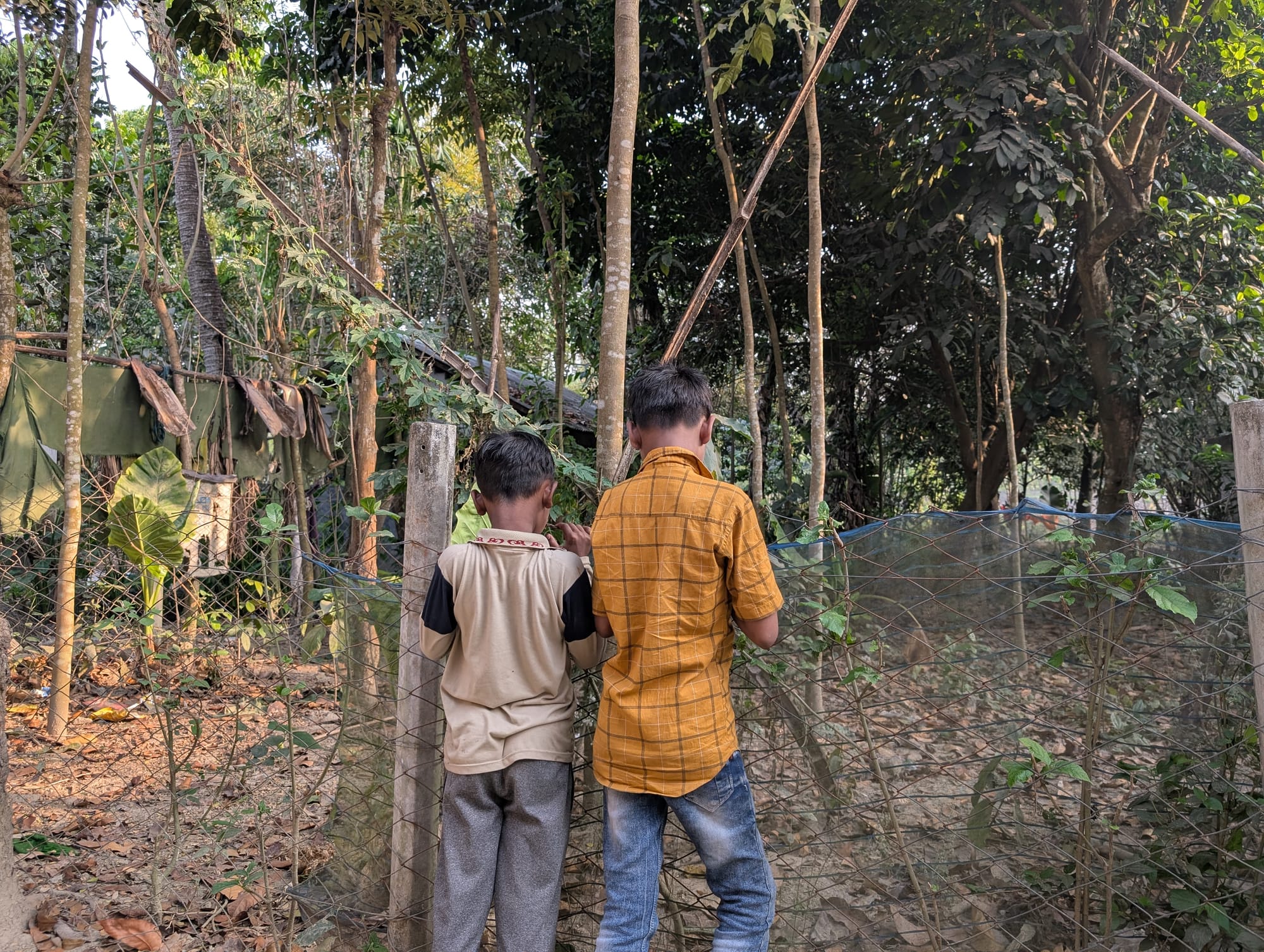
When two brothers came home to their grandmother’s house in a village outside Rangpur, they were quieter than children their age should be.
Gobhir Chandra Roy, 15, spoke in clipped answers. His younger brother, Badhan, 8, stayed close. Gobhir’s hands trembled. Nearly a month had passed since they had last seen their parents, who remained in a prison in Siliguri, India, accused of crossing the border illegally.
On February 17th this year, the Chandra Roy brothers were among 28 Bangladeshis — 27 of them children — who crossed into Bangladesh through the Benapole land border without a parent beside them. Officials describe it as a formal repatriation, part of a bureaucratic process worked out between India and Bangladesh.
On paper, it is meant to protect children guided by laws and norms. In practice, it often looks more like a chain of detention, separation and hurried custody transfer that leaves families split across borders, prisons and state-run shelters.
The group returned that day along with Gobhir and Badhan included 20 boys, eight girls, one child identified as a child trafficking victim and one adult with mental illness. Most of the children were immediately handed over to non-governmental organisations and then to relatives because one or both of their parents were still being held in India.
The scale of the phenomenon is larger than the individual cases suggest. Sikder Mohammad Ashrafur Rahman, Bangladesh’s acting deputy high commissioner in Kolkata, said his office processed 84 children in 2024, 108 in 2025 and 26 so far this year. Data from earlier years are scarcer, but figures compiled by Rights Jessore, a local NGO, suggest that the pace of child repatriations has intensified.
In the 12 years through 2021, the organisation received a little over 300 children from Indian authorities through Bangladeshi channels, an average of about 26 a year. But from 2022 through February this year, it received 158 children — roughly 38 a year. (The figures do not distinguish between children trafficked across the border and those separated from their parents after detention by Indian authorities.)
There isn’t a clear public record of what happens to these children after they return — whether they receive sustained counselling, whether they are in the end reunited with their parents, or how they absorb the trauma of being separated, detained and sent back.
For some children, Bangladesh is scarcely familiar.
Arjina, 8, set foot in the country for the first time when she crossed the border on February 17th. Born in India to Bangladeshi parents, she had never met the relatives she would now live with in Kurigram. Her uncle, Ruhul Amin, said, “We never met Arjina before, only spoke with her over video call.”
Her parents had spent 15 years working in a brick kiln in Delhi, according to relatives. About nine months ago, as they tried to return to Bangladesh with four children, Indian police intercepted them near Cooch Behar in West Bengal.
At first, Arjina’s uncle said, “They were held together.” Then the separation began: men from women, and eventually Arjina from everyone else. Her parents and three siblings remain in prisons or detention centres in India. She now lives with her grandmother in a village she had never seen before.
Her case is not an anomaly, aid workers say.
“In the past, many children did come back without their parents, but they were usually older — 13, 14, 15,” said Taufiquzzaman, an information and research officer at Rights Jessore. Younger children, he said, are arriving more often now, and with deeper visible distress.
“When we speak with Indian government counsellors at the border, they tell us the children cry a lot. They are very emotional and break down without their mothers,” he added.
Dulu Chandra Roy, a paternal uncle who received the Chandra Roy brothers at Benapole, said he noticed that too. Many children without guardians present were openly sobbing.
How families cross — and get trapped
The reasons families cross are rarely mysterious.
Many Bangladeshis travel to India, often through irregular routes, in search of work. Some find jobs in brick kilns, small businesses or informal labour. Some are trying to reunite with relatives already there. They move with the help of dalals, or brokers, who ferry groups across riverbanks and unofficial crossing points. In the case of the Chandra Roy family, who are Hindu, fear also played a role: they fled after the fall of Sheikh Hasina’s government in 2024 because they feared for their safety, according to Dulu Chandra Roy.
One broker, interviewed by Netra News in March near Benapole on condition of anonymity, described how groups of migrants are moved in batches. “Among them, it is impossible to tell who are traffickers and who are just ordinary people,” he explained.
But once detained in India, children and parents can enter parallel systems.
Monjur Hasan, a Bangladeshi father from Jessore, said he had lived in India with his wife and three children for years, working in the coconut trade. After business worsened, he returned to Bangladesh in 2024 and later tried to bring his family back through a broker. They were caught.
His wife was sent to Dum Dum jail in West Bengal. His sons, Mujahid, now 12, and Hujaifa, 8, were placed in separate homes. Their youngest sibling, Tasfiya, then 5, was sent to another facility.
On February 17th, he was reunited with the boys, but not with his daughter, who remains in a shelter in Kolkata. When Netra News contacted the home, an official declined to discuss the case, saying it involved bilateral relations. “This is not a local matter. It involves two countries. We cannot provide information,” an official said.
In India, the separation of foreign migrant families falls into what legal and prison reform experts describe as a “grey” zone. Madhurima Dhanuka, who leads the Prison Reforms Program at the Commonwealth Human Rights Initiative in New Delhi, said a child under six is generally not supposed to be separated from a detained mother.
“If it’s an illegal migrant and they are under the Foreigners Act, then once a child attains six years of age, they are shifted out to a child care institution,” she said. “And generally, care is taken that they are repatriated or deported back with their parents.”
In reality, that often does not happen.
“In many cases, children are sent back earlier while parents remain in prison. That has happened, and it is a grey area of law,” she added. “If you ask whether this is in the best interest of the child, I would say no. There have to be better means and ways.”
Bangladesh and India have, at least formally, committed themselves to a different standard. Their repatriation framework — along with the Convention on the Rights of the Child they both signed, and a 2015 bilateral understanding — centres on the “best interest of the child.”
Even before they were repatriated, children sent back to Bangladesh said they were allowed to see their parents only occasionally. Asked how often he saw his parents during the 10 months he was held in India, Gobhir Chandra Roy replied, “once a month.” Mujahid, another recently repatriated child, said the last time he saw his mother was when he was taken to the safe home after her detention.
But once a child is sent back, even that limited in-person contact disappears.
Shariful Islam Hasan, an associate director of BRAC’s migration program, said separating a child from parents and sending the child away, he said, violates their rights and leaves “deep psychological scars.” Laws may not spell out every scenario, he said, but “the spirit of all laws is to ensure sensitive and positive treatment toward children, women, and the elderly.”
The bureaucracy of return
Binoy Krishna Mallick, executive director of Rights Jessore, said the process stretches across police verification, the foreign and home ministries of both countries, and diplomatic channels before a repatriation order is approved. By the time a child reaches the border, documents have been prepared, ministries informed, and handover protocols arranged. “From there, they are sent to us, or through our High Commission,” said Mallick.
He said representatives from Bangladesh’s Ministry of Foreign Affairs are present during handovers, alongside probation officials and local police. Yet when Netra News later asked local border authorities about their role, both immigration officials and police denied participating in such ceremonies.
The ambiguity does not end at the border.
Once these children are back in Bangladesh, there is no dedicated national rehabilitation system for children repatriated without parents, according to officials at the Department of Social Services. “Some NGOs operate shelters and provide support in collaboration with the government,” said Md Shahidul Islam, an additional director at the department.
Khorshida Khanom, a trauma counsellor at Rights Jessore who has worked with nearly 70 such children, said many arrive in need of time, medical care and psychological support before being handed to relatives. “They need counselling, medical treatment, and time to stabilise,” she said. Instead, children are often transferred almost immediately.
Netra News contacted officials in West Bengal’s Women and Child Development department, as well as Bangladesh’s Ministry of Foreign Affairs, but none agreed to speak on the record.
Back in Rangpur, the failures of two bureaucracies have been reduced to a smaller, quieter grief.
Sipai Bala, the 72-year-old grandmother of Gobhir and Bandhan, has her grandsons back. But their parents are still gone. She counts the days and waits.
“The grandchildren have returned,” she said. “Now let my son come back. Let my daughter-in-law come back.”●