The Muslim citizens India dumped in Bangladesh
For much of 2025, Indian border troops marched Bengali-speaking Muslim citizens across the frontier and abandoned them inside Bangladesh, often at gunpoint. Bangladeshi authorities logged 120 such cases in six months. The real number is almost certainly higher.
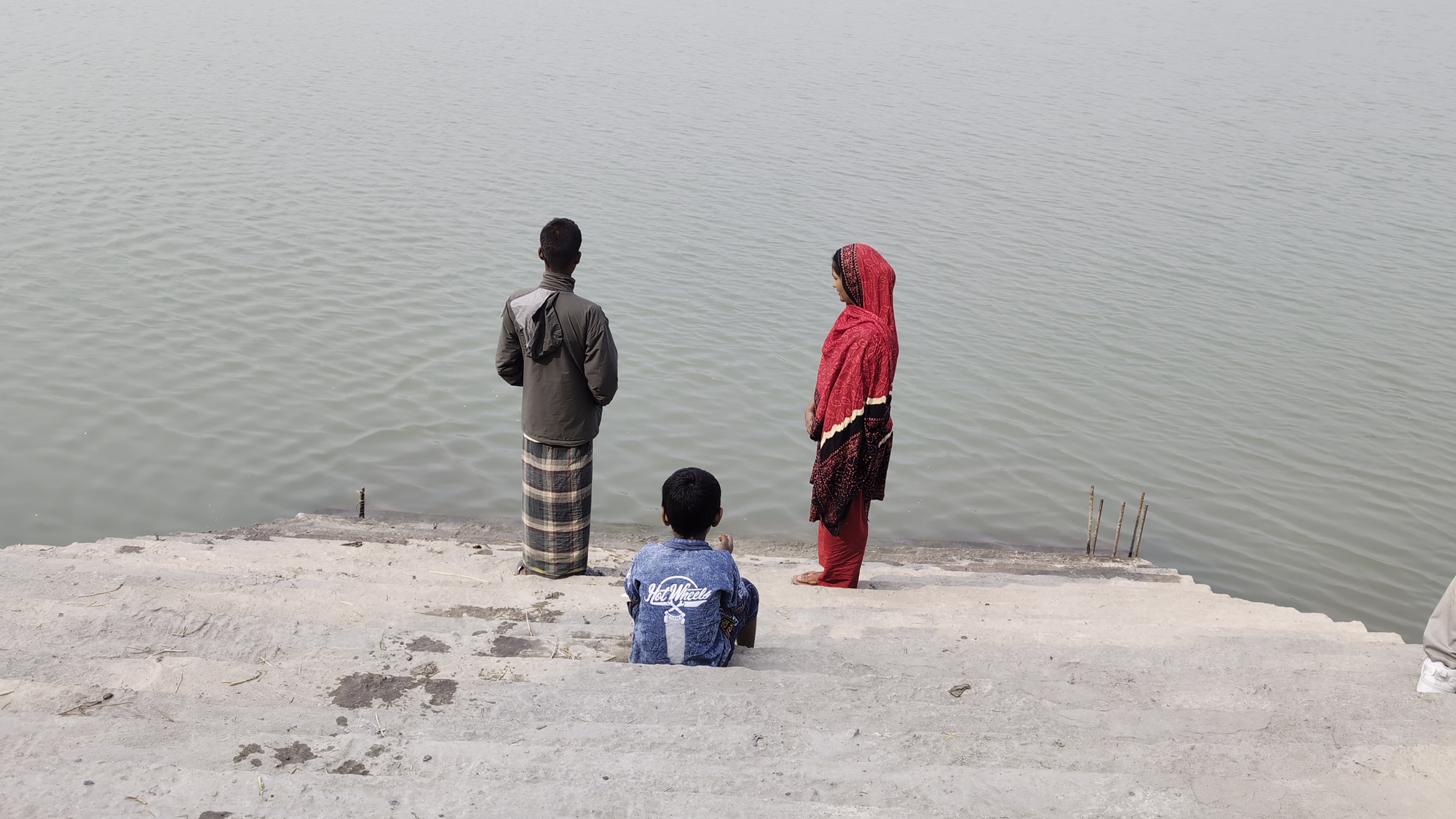
When a local politician from West Bengal’s ruling Trinamool Congress party arrived at her brother’s home this month, Sunali Khatun welcomed him in. He brought clothes for her young son, and a promise she had heard before: that her husband, stranded across the border in Bangladesh, would soon be brought home.
“Local leaders keep saying they are looking into it,” Khatun said by phone. “They keep telling me not to worry.”
But Khatun seems to have plenty to worry about.
For more than four months, she and her three children have been living apart from her husband, Danish Sheikh, a 29-year-old Indian citizen now waiting across the frontier in Bangladesh’s border district of Chapainawabganj. “It has become very difficult to live,” she said. “I cannot work…my brother is struggling to support us.”
Her ordeal is one of several cases documented by Netra News that point to a troubling pattern: Indian police officers detaining Bengali-speaking Muslim citizens, labelling them undocumented Bangladeshi migrants, and handing them over to border forces who then push them across the frontier — often without any court hearing, and in some instances, despite the detainees producing Indian identity documents.
Migration experts say such expulsions, known as “push-ins” in Bangladesh, rose sharply in mid-2025. There is no reliable public data on how many Indian citizens have been affected, but Netra News obtained a list compiled by the Border Guard Bangladesh (BGB) of 120 people pushed across the border over a six-month stretch in 2025.
All bore Muslim-sounding names, and the actual tally is likely to be higher.
120 Indians Pushed Into Bangladesh
A list obtained by Netra News from the Bangladesh Border Guard (BGB) of individuals sent from India to Bangladesh on suspicion of being Bangladeshi — between June and December 2025. The BGB says all 120 were eventually returned to India. The list is incomplete: several confirmed push-in cases do not appear on it.
| # | Name | Age | Father / Husband | Village | Post Office | Thana | District | State |
|---|
From neighbours to inmates
Khatun, 25, and her neighbour Sweety Bibi, 34, had moved separately to New Delhi from West Bengal in search of work. They lived in the same housing block in Rohini, Sector 19.
On June 20th 2025, officers from the KN Katju Marg police station carried out a raid there targeting undocumented Bangladeshi workers. They detained Bibi’s 15-year-old son, Kurban Sheikh, and Khatun’s husband, Danish Sheikh.
Both women — carrying their Indian citizenship documents — went to the station to secure their relatives’ release. Instead, they were detained too, along with Bibi’s six-year-old son, Imam Dewan, and Khatun’s eight-year-old.
At the station, Danesh Sheikh said in a later interview, an officer phoned his manager and asked whether he could produce 100,000 rupees, about $1,200, for his release. When no money was forthcoming, he recalled, the pressure turned personal. “I will prove that you are Bangladeshi even if you are not,” Sheikh said the officer told him.
Inscript, a West Bengal-based news outlet working alongside Netra News, contacted the police station for comment. The police declined. Inscript was unable to reach Sheikh’s manager.
What followed bypassed any judicial process. The group of six was transported across state lines to the Assam border and, on June 26th 2025, forced through the Kurigram frontier into Bangladesh, after members of India’s Border Security Force (BSF) abandoned them in a dense forest, according to their accounts. “They just left us in the jungle,” Sheikh said. “It took us two days to find our way out.”
Local residents in Bangladesh helped the group emerge from the forest. They tried to cross back into India at a different point, but were intercepted. “The Indian BSF and police caught us,” he said. “They shouted, ‘Stop, or we will shoot you!’ At first, we were so terrified we didn’t stop. But they kept shouting, ‘If you don’t stop right now, we will open fire.”
Both women said they were severely beaten. “The way we have been punished, even those who commit murder do not face such severe punishment,” Khatun said.
According to their accounts, the BGB gave them 2,000 taka to travel to Dhaka. Netra News could not independently verify this with the Kurigram BGB, but the BGB’s public relations officer, Shariful Islam, said border forces on the Bangladeshi side often aid Indian nationals who have been pushed across.
The families worked for a time as day labourers in the Diabari neighbourhood of Uttara, a suburb of Dhaka, before travelling to Chapainawabganj, hoping to find a relative. On August 20th 2025, the six were detained there and charged with illegally crossing into Bangladesh. They were jailed in Chapainawabganj; their first hearing came on September 27th 2025.
After nearly four months behind bars, they were released on 2nd December 2025. Three days later, the BGB escorted Khatun — by then, eight months pregnant — and her son to the border, where the BSF received them. Her husband, Sheikh, however, was not taken back. Nor was Sweety Bibi, nor two of her sons.
On a phone call on April 2nd, Bibi broke down. “I want to go home. I want to return to my son,” who remains in West Bengal.
The four are now sheltering in a shed lent to them by a family in Nayagola, near the border.
‘They labelled me a Bangladeshi’
Amir Sheikh’s journey began not in Delhi but in Jaipur, the capital of the north Indian state of Rajasthan.
The 20-year-old, originally from Malda district in West Bengal, had travelled there for work. In June 2025, he was riding in a shared tempo to a job site when officers from the Pratapnagar police station pulled him out. They had heard him speaking Bengali, he said, and suspected him of being Bangladeshi.
“Because they labelled me a Bangladeshi, they beat me severely with a wooden plank,” he told a reporter with Inscript at his home in Malda on October 7th last year. Amir’s mobile phone was confiscated, and he was held for weeks, he said, before being flown from Kolkata’s Dum Dum Airport and driven by bus to the border.
“They had guns, cleavers,” he recalled. “They told me, ‘If you move to the right or to the left, you will be shot. I am showing you the straight path. Go exactly down that road. If you veer left or right, you’ll take a bullet.’”
He was pushed into Bangladesh through the Bhomra frontier in Satkhira in July 2025. A video clip of him in distress, pleading to be returned to India, circulated on social media that month. Amir said it was filmed in Bangladesh.
He returned home on August 13th last year. The BSF, according to Indian media reports, said he had accidentally wandered into Bangladesh. His uncle, Azmul Sheikh, offered a completely different account. “It was the BSF itself that arranged for Amir’s bail from Bangladesh,” he said. “Furthermore, they advised the family to remain silent and hush up the entire incident to keep it from coming to light.”
A list of 120, and the gaps
The list Netra News obtained from the BGB covers individuals sent from India to Bangladesh on suspicion of being Bangladeshi between June and December 2025. In December, Islam, the BGB’s public relations officer, said all 120 had been returned to India. On April 21st, he told Netra News that no further push-in cases had been recorded in 2026.
But the list is plainly incomplete.
Neither Khatun nor Bibi’s family appears on it. Nor does Amir Sheikh, the Malda labourer – even though, by the BGB’s own account of push-backs, he should.
In December last year, Netra News dialled 28 of the phone numbers on the list. Eight connected. Three families agreed to speak. Two confirmed that their relatives had been pushed into Bangladesh and eventually returned to India. A third, who asked not to be named, said his parents had been pushed across and that he had lost track of them.
Netra News contacted the BSF, the BGB, and Bangladesh’s Ministry of Foreign Affairs for comment in December. None responded. On April 13th, Netra News again wrote to the foreign ministry; there was no response.
Abdullah Al Noman, a Bangladeshi advocate, said the expulsions appear to run against international norms. He pointed to Article 13 of the International Covenant on Civil and Political Rights, which both Bangladesh and India have signed, and which requires that no one be expelled without a fair hearing.
“Even if a person is suspected of having obtained citizenship through collusion or unfair means, it must be properly heard and proven through a competent court of law that they are not a citizen of that particular country,” he said.
Elections, and the uses of suspicion
The push-ins and the intensified push-backs of suspected Bangladeshis by the BSF, point to a larger political dynamic, said Asif Faruk, general secretary of Parijayee Sharmik Aikya Manch or Migrant Labourer Unity Forum in India. The forced expulsions and harassment of Bengali-speaking migrant workers, he said, are driven in part by electoral calculation — particularly ahead of the 2026 West Bengal state elections, which are now underway — where branding workers “Bangladeshi” polarises voters and divides the labour force.
Faruk also cited a 2025 Indian government notification targeting Bengali speakers and alleged Rohingya as a turning point that intensified detentions and expulsions. Unless those policies are withdrawn and political actors take responsibility, he argued, the cycle will continue.
As for promises being made to Khatun by local politicians — that her husband will soon be returned — Faruk was sceptical. Any repatriation, he said, would require the intervention of India’s Supreme Court and could not be arranged by a state government.
“It is difficult to understand from what basis such assurances are being made,” he said. “If they are promising that they will bring them back, then the question is, were they the ones who sent them in the first place?”●
Netra News, in collaboration with Inscript, first reported this story over several months in 2025, publishing a Bangla-language video in December of that year.